

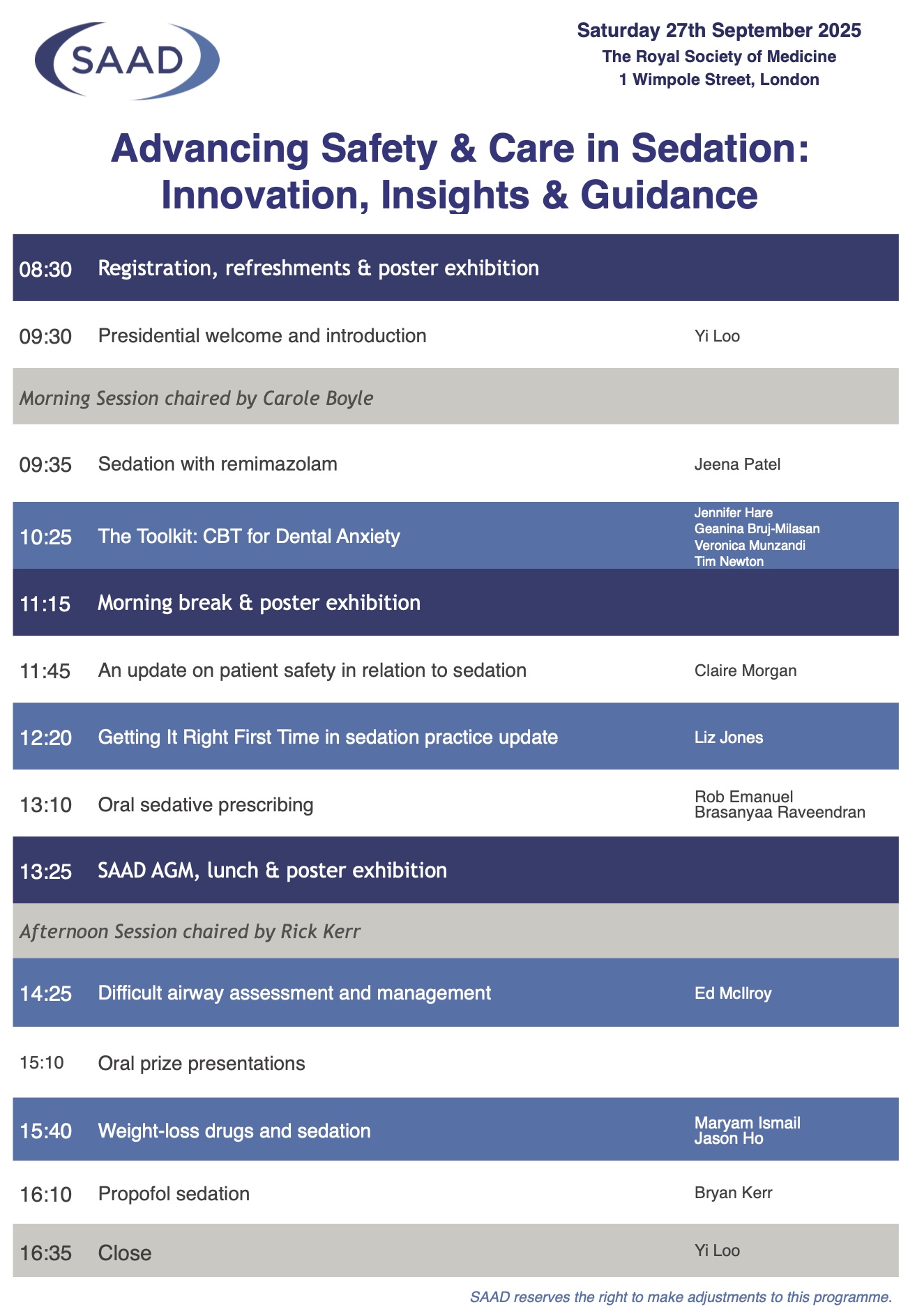
2025 SAAD Symposium
Advancing safety and care in sedation: innovation, insights and guidance
Saturday 27 September 2025, Royal Society of Medicine, London
On 27 September 2025 the Society for the Advancement of Anaesthesia in Dentistry (SAAD) hosted its annual SAAD Symposium at the Royal Society of Medicine, bringing together dental professionals, anaesthetists, psychologists and patient safety leaders for a comprehensive exploration of innovation, safety and patient-centred care in dental sedation.
This year’s theme, ‘advancing safety and care in sedation: innovation, insights and guidance’ addressed both clinical advancements and the changing landscape of sedation and anxiety management in dentistry.
Attendees were treated to a rich and varied programme looking at the evolving clinical use of remimazolam by Sheena Patel and oral sedatives by Rob Emmanuel and Brasanyaa Raveendran. Maryam Ismail and Jason Ho then expanded on the increasing popularity of weight loss drugs and the current literature around their effects on dental sedation.
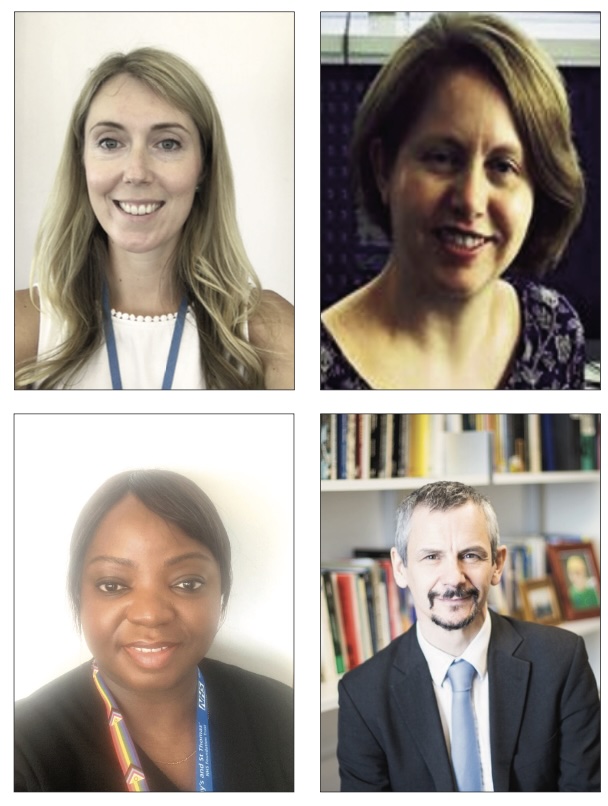
Prof Tim Newton, Dr Jen Hare, Geanina Bruj-Milasan and Veronica Munzandi launched The Toolkit: CBT for Dental Teams; the newly updated cognitive behavioural therapy resource specifically developed for integration into dental workflows by dental teams and now available from SAAD.
The changing national patient safety landscape and the implications for providers were highlighted by Claire Morgan, Consultant in Restorative Dentistry and Patient Safety Specialist, prior to Liz Jones, GIRFT Lead for Hospital Dentistry, providing an update on current findings from the national initiative focused on dental sedation services.
Ed McIlroy, Airway Lead for the Royal College of Anaesthetists, highlighted insights in managing airway risks alongside Bryan Kerr, Consultant in Special Care, who reviewed intravenous sedation with propofol for dental care.
SAAD awarded essay, oral and poster prizes to teams from across the UK who showcased innovation in the use of remimazolam, digital patient information videos to aid anxiolysis and sedation preparation, and excellence in clinical care through direct access to care with sedation by dental therapists.
President of SAAD, Yi Loo, commented: ‘This year’s symposium demonstrated the strength and depth of collaboration across disciplines. From behavioural interventions to pharmacological updates, the programme reflected the nuances and complexity of modern sedation practice and the dedication of the professionals delivering it safely.’
The 2025 SAAD Symposium reaffirmed the organisation’s commitment to education, research, and clinical excellence in pain and anxiety control in dentistry. The event was praised for its mix of practical guidance, academic rigour, and opportunities for professional development for the dental teams.
SAAD annual symposium 2025 speaker abstracts
Sedation with Remimazolam
Jeena Patel, BDS (Hons), MFDS
Special Care Dental Registrar, Barts Health Trust
Correspondence to: jeena.patel2@nhs.net

Remimazolam, an ultra–short-acting benzodiazepine, is emerging as a valuable alternative to midazolam for dental conscious sedation. With rapid onset, organ-independent metabolism and predictable recovery, it allows finer control of the sedation window and reduces risks linked to prolonged recovery, is particularly beneficial for older adults, medically compromised patients and those with complex procedures or failed midazolam sedation.
This presentation reviews local experience with over 250 remimazolam cases, including 80 cases using an infusion pump for real-time titration. Clinical cases highlight its effectiveness in anxious patients, individuals with learning disabilities and long procedures requiring maintenance sedation.
Attendees will gain insights into dosing strategies, practical considerations, and future directions such as target-controlled infusion and multi-drug protocols, illustrating how remimazolam can enhance efficiency, offer an option to accept dental procedures and patient comfort in dental sedation practice.
The Toolkit - CBT for Dental Anxiety
Jennifer Hare, DHealthPsy, CPsychol, AFBPS
Consultant Health Psychologist, Dental Psychology Service
Guy’s and St Thomas’s NHS Trust.
Geanina Bruj-Milasan, Msc Health Psychology , DHealthPsy
Clinical Nurse Specialist and Trainee Health Psychologist,
Dental Psychology Service
Guy’s & St Thomas’ NHS Foundation Trust
Veronica Munzandi, Level 3 in Counselling, NEBDN Oral health and Dental Nurse NVQ 3 City and Guilds
Clinical Nurse Specialist and Oral Health Educator,
Dental Psychology Service
Guy’s & St Thomas’ NHS Foundation Trust
Tim Newton, PhD
Dean of Research Culture, Professor of Psychology as Applied to Dentistry,
Honorary Consultant Health Psychologist
Kings’ College, London
Correspondence to: jennifer.hare@kcl.ac.uk, geanina.bruj1@nhs.net, veronica.munzandi@nhs.net and tim.newton1@nhs.net
Dental anxiety continues to present a significant challenge to patient care, often resulting in avoidance, delayed treatment and poorer oral health outcomes. Cognitive behavioural therapy (CBT) has long been recognised as an evidence-based approach to support patients in overcoming dental phobia and enabling sustainable engagement with treatment. This talk will explore the evolution of psychological management of dental anxiety, focusing on the development of The Toolkit: CBT for Dental Anxiety and our longstanding partnership with the Society for the Advancement of Anaesthesia in Dentistry (SAAD).
The original CBT manual was created in 2008 by the King’s College London (KCL) team, with funding from SAAD, to provide practical behavioural management strategies for use within dental practice. A decade later, following the establishment of the specialist NHS Dental Psychology Service at Guy’s and St Thomas’ NHS Foundation Trust, a new SAAD grant enabled the manual to be comprehensively revised and updated. The result was the publication, in September 2023, of a fully re-written 10-chapter edition reflecting the latest research and current clinical practice in CBT for dental phobia.
The new manual provides detailed guidance on assessment, formulation, skill acquisition, behavioural and cognitive interventions, therapy review and ending, supervision and service development. It is supported by 31 appendices and a library of patient demonstration videos and photographs used in graded exposure work. Each chapter is accompanied by exercises to consolidate learning, designed for use in supervised training or as part of self-directed study (with professional oversight recommended). The manual is available through SAAD and usually forms part of a face-to-face training course delivered by the authors.
In this presentation, we will reflect on the development of the toolkit, the impact of the collaboration between SAAD and the NHS Dental Psychology Service and the role of these resources in supporting practice change. We will also consider the broader landscape of behavioural management in dentistry, including the publication of the NHS England dental anxiety management guide (2023). Finally, we will look ahead to the future - exploring opportunities for wider implementation, workforce training and expanding access to evidence-based psychological care for dentally anxious patients.
By charting this journey - from the first toolkit in 2008 to the most recent manual and national guidance - we aim to illustrate the progress made, the lessons learned and the continuing opportunities to embed psychological care as a routine part of dentistry.
How the patient safety landscape is changing
Claire Morgan, BDS, DipDSed, FDSRCS (Rest Dent), MSc Patient Safety
Consultant in Restorative Dentistry, Barts Health Trust
Patient Safety Specialist, Royal London Hospital
Correspondence to: claire.morgan16@nhs.net
This presentation focusses on how the landscape for patient safety is changing. It should be of interest to all of us as healthcare workers and patients. Examples will be drawn on, where appropriate, from dentistry and sedation. There will be an initial recap on the scale of the problem posed by patient safety in healthcare and its impact on society, along with the importance of contextualising patient safety. The ‘3 Is’ (insight, involvement, and improvement) from the Patient Safety Strategy will be explored, learning from patient safety events, the national patient safety syllabus, checklists, and engaging with patients and staff are considered. There will be an update on the replacement of the Serious Incident Framework to the Patient Safety Incident Response Framework in terms of compassionate engagement, proportionate high-quality investigations, systems-based approaches to learning and supportive oversight and improvement. The changing concept of the never event will be reflected on. Finally, the underpinning foundations of culture and systems will be mentioned. the closing remarks will attempt to focus on the positive future for patient safety.
Getting It Right First Time in sedation practice update
Liz Jones, OBE, BDS, FDSRCS, MOrthRCS, MSc (Univ London)
GIRFT Clinical Lead for Hospital Dentistry
Correspondence to: liz.jones15@nhs.net
The Hospital Dentistry national report was published in 2021 following visits to 106 acute trusts at which time metrics were discussed with data taken from HES (Hospital Episode Statistics). The acute trusts visited were those providing care in one or more of the four main hospital dentistry specialties of oral surgery, orthodontics, restorative dentistry and paediatric dentistry.
Metrics devised for oral surgery included activity for common oral surgery procedures with the care setting identified (outpatient, zero day length of stay, overnight stay). There was significant variation between trusts in care settings recorded.
The incidence of LA +/- sedation is difficult to identify due to irregular and inconsistent coding; and trusts are reluctant to start up sedation services in some part due to perverse incentives in payment systems. It is accepted that sedation is preferable to a general anaesthetic and the lack of availability of sedation services should be a concern.
Oral sedative prescribing
Rob Emanuel, BDS, MSc, FDSRCSEd
Consultant in Special Care Dentistry
Sussex Community NHS Foundation Trust
Brasanyaa Raveendran BDS, PgCert(MedEd), MFDS, DipSCD (RCSEd)
Specialty Registrar, Sussex Community NHS Foundation Trust
Correspondence to: robert.emanuel@nhs.net and b.raveendran@nhs.net
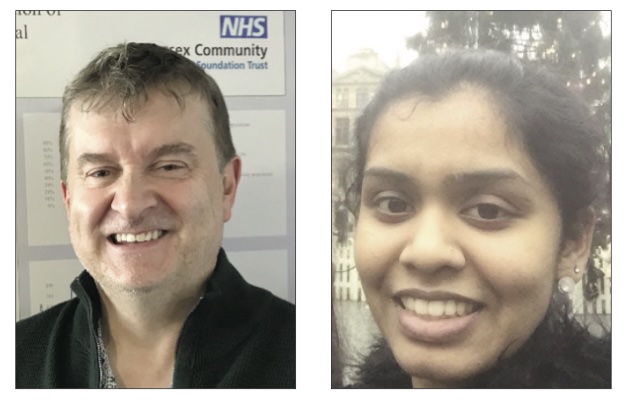
The attitudes of doctors and dentists to the use of oral sedatives to control anxiety in minor surgical, imaging and dental surgery
R. Emanuel, B. Raveendran, S. Turkistani, M. Asbury, J. Pateman, P. Patel.
Learning points
Both doctors and dentists value small dose sedatives as useful in anxiolysis for anxious patients. However, their current use is for limited circumstances only. Both groups report barriers to their use, but these barriers are different for each different professional group.
To improve their future use in dentistry, it was suggested further training and experiential support would be useful.
Dental surgery is a cause of anxiety for many patients as are certain medical procedures. To alleviate anxiety for patients, a small dose of oral sedative can be used. Then again how often are they used in both dental and medical settings, and how do different practitioners, both medical and dental, perceive the benefits and barriers to their use?
The aim of this study was to
- Explore the attitudes and practices of both dental and medical practitioners regarding using oral sedatives in their day-to-day practice
- Develop a questionnaire based on the qualitative data to be used in planned future quantitative research.
Methods
Qualitative research methodology using semi structured interviews.
Results
A total of 16 practitioners were interviewed (eight medics and eight dentists). Several themes and sub-themes emerged including similarities and differences between prescribing patterns. The results showed their use was considered advantageous to both groups, but was limited to certain circumstances only and routine use was only for very select cases. The barriers to their use were different for both groups but in general they both reported subjective and practical barriers.
Conclusion
Both professional groups occasionally use oral sedatives to aid in anxiolysis.
Difficult airway assessment and management
Ed McIlroy, MBBS, MRes, FRCA, PGDip Perioperative Medicine
Consultant Anaesthetist, Royal Devon and Exeter hospital
Correspondence to: e.mcilroy@nhs.net
Advances in anaesthetic drugs, monitoring and technology have made delivering what was once a high risk and difficult to titrate ‘art’ into safe and exacting science. However, the clinician’s pre-operative prediction of what might constitute a difficult airway is still 50% sensitive….at best. Serious airway complications have a high incidence of hypoxic brain injury or death (50% of airway closed claims). The increasing incidence of obese, elderly and co-morbid patients in our UK demography means there are more difficult airways out there.
It is increasingly incumbent on the community practitioner to have a good pre-operative assessment (pre-operative airway ultrasound has been an advancement), a tool box of basic and advanced airway skills to manage the expected and unexpected difficult airway and to utilise the advances in airway devices to deliver safe airway management. New basic standards of monitoring and equipment have tried to mitigate what are infrequent, but devastating, complications.
I hope to give you a few red flag examination findings, some parameters to work within and give some tips on ways to get yourself out of trouble (or avoid it completely).
 A service evaluation of Kent Community Health's 'A Guide to Inhalation Sedation’ animation video
Amy Amanfu, BDS
Dental Core Trainee, Special Care Dentistry
ONEL Community Dental Services
Dr Sumayyah Hannan
Dental Core Trainee, Special Care Dentistry
ONEL Community Dental Services
Correspondence to: amy.amanfu@nhs.net
Background
This quality improvement project reviewed the effectiveness of the video - which was designed to help explain nitrous oxide dental sedation to paediatric patients and their guardians. The video has been recognised as a valuable and accessible tool in improving both parties’ understanding and expectations of the procedure
Aims and Objectives
- Evaluate the effectiveness of the inhalation sedation animation video
- Confirm that patients have accessed the video prior to undergoing treatment
- Identify any areas of improvement based on patient and family feedback.
Method
The patients and their guardians were invited to view the animation video. This was observed by the treating clinician to ensure continuity across delivery.
Post-treatment, feedback was collected via forms, in which both parties were asked to evaluate their experience. Participants assessed the animation’s accuracy in reflecting their treatment and offered suggestions for refinement. Data were analysed over two cycles (n=1 cycle), with findings informing ongoing review and refinement.
Results and Recommendations
Feedback was overwhelmingly positive, with respondents affirming that the animation increased their preparedness, treatment uptake and accurately reflected their treatment. Suggestions made for improvement included animation style for the older paediatric patients and potential language barriers to non-native English speakers.
Sedation Under Scrutiny – A Systems-Based Approach to Reducing Failure and Variation in Co nscious Sedation
Vishnu Sri Shanmuganathan, MBBS, BDS, BSc, AKC, MFDS, PGCert, FHEA
Academic Dental Core Trainee
Correspondence to: vishnunathan@doctors.org.uk
Sedation failure seldom results from a single error. More commonly, it arises from a cascade of subtle system weaknesses. This presentation applies a systems-thinking perspective to conscious sedation, examining how factors such as incomplete risk assessment, unclear team roles and communication lapses can undermine patient safety.
Grounded in NHS GIRFT recommendations and cross-disciplinary safety models, the session introduces a practical failure mapping framework - a five-domain tool for identifying vulnerabilities and promoting anticipatory governance across sedation care. The framework spans:
- pre-procedure planning
- procedural execution
- human factors and communication
- recovery
- discharge.
Each domain prompts sedation teams to evaluate workflow friction points, role clarity and debrief consistently using psychologically safe, non-punitive methods. The model is adaptable to both primary care and hospital-based settings, enabling scalable, context-specific improvement.
This presentation encourages teams to shift from reactive troubleshooting to proactive systems literacy enhancing safety, reducing unwarranted variation and aligning sedation delivery with high-reliability healthcare principles.
Weight-loss drugs and sedation
Jason Ho, BChD, MFDRCSEd, PgCE.ME
Oral Surgery Specialty Dentist, Birmingham Dental Hospital
General Dental Practitioner, Shenstone Dental Centre
Maryam Ismail, BDS, MFDSRCS(Ed), Dip SCDRCS(Ed), MSCDRCS(Ed)
Specialist in Special Care Dentistry
Guy’s and St Thomas’ NHS Foundation Trust and Whittington Health NHS Trust
Correspondence to: maryam.ismail6@nhs.net and jason.j.ho@kcl.ac.uk
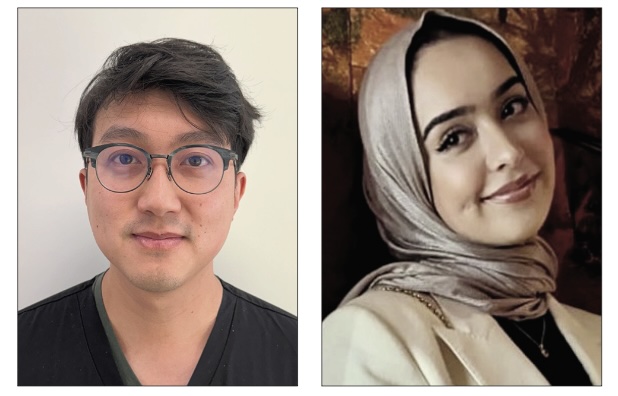
The expanding use of glucagon-like peptide-1 (GLP-1) receptor agonists and dual glucose-dependent insulinotropic polypeptide (GIP)/GLP-1 receptor co-agonists for obesity and type 2 diabetes presents new considerations for safe dental sedation. While these therapies provide substantial cardiometabolic benefits, their impact on gastric motility, particularly delayed gastric emptying, introduces a potential risk of regurgitation and aspiration during procedures. Recent Medicines and Healthcare products Regulatory Agency safety communications, supported by guidance from the Royal College of Anaesthetists, have reported residual gastric contents despite adherence to standard fasting protocols prior to anaesthesia, emphasising the need for careful pre-operative assessment and planning.
In dentistry, conscious sedation with titrated intravenous midazolam remains the mainstay technique. It is valued for its favourable safety profile, preservation of protective airway reflexes and predictable recovery, making aspiration events exceptionally rare. Nonetheless, patients receiving GLP-1 therapies may present additional challenges. Gastrointestinal side effects such as nausea, vomiting and reflux, combined with rapid weight loss, fatigue and potential nutritional deficiencies, may influence sedation planning and patient response. Awareness of these factors is essential to ensure patient safety.
Recent international guidance advises against the routine discontinuation of GLP-1 therapy prior to procedures, instead advocating an individualised, risk-stratified approach. However, much of this guidance is written from an anaesthetic perspective, with limited consideration of conscious sedation in dental practice. A balanced approach is required that recognises both the very low incidence of aspiration during dental sedation as well as the importance of identifying patients who may warrant additional precautions.
Risk mitigation strategies for dental sedationists should include explicit documentation of GLP-1 or dual agonist therapy during pre-assessment, deferral of elective procedures during periods of dose escalation or in the presence of significant gastrointestinal symptoms and consideration of modified fasting or clear fluid protocols for patients at higher risk. Midazolam should remain the preferred sedative due to its safety margin, with alternative or adjunctive regimens reserved for hospital-based care where additional monitoring and airway support are available.
Further research is required to quantify the true aspiration risk associated with GLP-1 therapies under conscious sedation and to develop evidence-based dental protocols. Clear, dentistry-specific guidance will be crucial to support clinicians in balancing vigilance with proportionality as the use of these agents continues to grow.
Propofol sedation
Bryan Kerr, MSc, MSCD
Consultant in Special Care Dentistry
Department of Sedation and Special Care Dentistry
Guy's and St Thomas’ NHS Foundation Trust
Correspondence to: Bryan.Kerr@gstt.nhs.uk
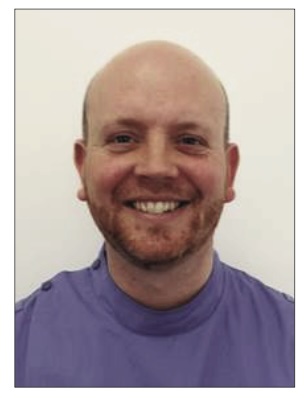
Aim
Overview of propofol and its use in a tertiary referral centre
Objectives
- Knowledge of propofol pharmacology and delivery
- Understanding of the risks and benefits of intravenous propofol.
Abstract
Intravenous propofol for conscious sedation can be a safe and effective technique. There may be some advantages over midazolam for some patients, in certain procedures and where midazolam has failed and a general anaesthetic is not indicated.
We present prospective audit data of around 900 patients and discuss its use in Special Care Dentistry at Guy’s Hospital.
SAAD annual symposium poster presentation abstracts
Evaluating remimazolam intravenous sedation via infusion pump in special care dentistry: a retrospective review
Wan Yee Liang, BDS
Dental Core Trainee 1
Jeena Patel, BDS
Specialty Trainee in Special Care Dentistry
Barts Health NHS Trust
Correspondence to: wanyee.liang@nhs.net
Background
Remimazolam is a short-acting benzodiazepine with titratable properties, offering rapid onset and recovery. While infusion pumps have been used to deliver remimazolam in procedural sedation, limited data exists in special care dentistry. This study evaluates its use via infusion pump in the special care dental setting, focusing on clinical outcomes, age-specific flow rates and practical considerations.
Methods
A retrospective review of 80 cases using remimazolam via infusion pump for intravenous sedation cases was conducted. Data included age group (<65, 65-74 and ≥75 years), ASA, BMI, flow rate, bolus, recovery time and sedation outcomes. Success was defined as completion of planned treatment without adverse events.
Results
Sedation was successful in 72/80 cases. The mean BMI was 27.6, with negligible impact on outcomes. Average flow rates were: <65 – 21.1 mg/hr, 65-74 – 19.45 mg/hr, ≥75 – 15 mg/hr, indicating lower rates for older patients. Average infusion times were 35.1minutes, 29.7minutes and 31.2minutes respectively. The infusion pump allowed real-time adjustments based on cooperation, oxygen saturation and procedure. Mean recovery time was 20.1 minutes. Both single operator-sedationist and separate sedationist models were used.
Conclusion
Remimazolam via infusion pump offers effective sedation with smooth recoveries. Success was achieved across a wide age range, ASA and BMIs. The infusion model allowed individualised titration, and supports the single operator-sedationist model.
Direct access inhalation sedation: expanding the role of dental therapists in primary care
Alexandra Ward, BSc (Hons) Dental Therapy
Dental Therapist
Peninsula Dental Social Enterprise (PDSE)
Correspondence to: alexandra.ward@plymouth.ac.uk
Abstract
Many children are too anxious to receive dental treatment in a routine dental setting and may benefit from conscious sedation. However, as many practices do not offer this service, an external referral is often required, contributing to significant wait times in community dental services and hospital units. To address this challenge, Peninsula Dental Social Enterprise launched a dental therapist-led inhalation sedation service in June 2024. This initiative enables dental therapists to practise to their full scope, including under direct access and with inhalation sedation, within the primary care setting. The aim is to improve access to timely dental care, reduce disease progression and ease pressure on secondary care services. Since the launch, the wait time for an inhalation sedation assessment within Peninsula is just eight weeks, compared to 72 weeks in community services. The service has grown from one session per month to a weekly clinic, accepting 21 patients and successfully restoring 15 to clinical oral health. The service has been well received by patients with 100% of users scoring the service as very good. This approach demonstrates a scalable solution, effectively utilising the dental therapist workforce and highlighting their value within the NHS and primary care setting.
The delivery of anaesthetist-led intravenous sedation within a Community Dental Service - a pilot service
Dr Helen Adam, BDS, MDentSci, PGCert
Specialist in Special Care Dentistry
Dr Laura McKay, BDS, MFDS, PGCert, DipSCD, MSCD
Specialist in Special Care Dentistry
Wirral Community Health and Care NHS Foundation Trust
Correspondence to: helen.adam2@nhs.net
Background
Wirral Community Health and Care NHS Foundation Trust provides primary care-based dentist-led intravenous sedation for patients of ASA1-3. More complex patients are unsuitable for care in this setting, requiring onward referral to distant services with long wait times. For these groups, a local theatre- based anaesthetist-led sedation pathway has been piloted, preventing the need for onward referral.
Methods and results
Patients whose needs could not be met were identified. Acceptance criteria for the lists were developed, to include ASA3-4 patients and those with challenging cannulation, those requiring multi drug sedation methods and those where midazolam sedation had failed. Liaison with anaesthetic colleagues allowed some GA theatre lists to convert to anaesthetist-led sedation lists and remote anaesthetic assessment of patients was undertaken.
The sessions successfully prevented the need for GA in some cases, and increased list capacity, by allowing increased cases per list. However, treatment complexity may be limited e.g. single tooth extraction.
Discussion
Due to complexity, many patients are unsuitable for primary care dentist-led sedation. In-hospital anaesthetic-led sedation is an appropriate alternative but is not routinely available and sees long waiting lists. The pilot successfully confirmed local delivery is appropriate, but further work is needed in pathway design and acceptance criteria.
Development of an adolescent intravenous sedation service at a community and specialist dental service
Chloe Bass, BDS, BSc, MJDF RCS (Eng), MFDS RCS (Ed)
Senior Dental Officer in Oral Surgery
Andrea Aspinall, BDS MFDS DipConSed MPaedDent
Specialist Paediatric Dentist
Central London Community Healthcare NHS Trust
Correspondence to: C.bass@nhs.net
Within our community dental service we identified a need for an adolescent intravenous sedation service for patients who fail treatment with inhalation sedation, have significant anxiety or require complex surgical procedures. The service aims to reduce general anaesthetic referrals, ease hospital pressures and to offer a supportive environment for adolescents with complex needs.
A standard operating procedure was created for 12 to 16-year-olds and presented to the Clinical Governance and Medicines Management Boards for approval. Supporting materials included adolescent and parent information leaflets, clinical note templates and a post-operative patient questionnaire.
Referrals are jointly assessed by an oral surgeon and paediatric specialist. EMLA and inhalation sedation assist with cannulation, while distraction tools—music, tablets and virtual reality headsets—enhance patient comfort.
Initial results from the pilot were positive: eight patients received treatment successfully. Telephone follow-up revealed high satisfaction, with no memory of the procedure, no adverse effects and all patients very likely to recommend the service to friends and family.
Reflections highlighted the importance of clear communication, appropriate waiting areas and consistent staffing. Future developments will focus on increasing capacity, improving recovery facilities, and training more dental team members.
Propofol outcome and adverse event reporting at Guy’s Hospital: a service evaluation
Dr Sarah Bux
Specialty Training Registrar
Special Care Dentistry
Dr Bryan Kerr
Consultant in Special Care Dentistry
Guy’s and St Thomas’s Foundation Trust
Correspondence to: Sarah.bux2@nhs.net
Propofol sedation offers rapid onset, titratability and short recovery, making it an effective technique in special care dentistry. It enables safe dental care for patients with dental anxiety, medical comorbidities or previous midazolam sedation failures, while reducing the risks and resource demands associated with general anaesthesia.
This service evaluation reviews the use of intravenous propofol sedation within the Special Care Dentistry department at Guy’s Hospital, focusing on clinical indications, dosing protocols, adverse event reporting and demographic trends.
Prospective data was collected from 918 sedation episodes between 2014 and 2019. Patient demographics, indications for propofol sedation, treatment outcomes, sedation levels, operating conditions, adverse events and patient satisfaction were systematically recorded.
Preliminary analysis demonstrates clear trends in referral indications, including severe dental anxiety, medical comorbidities, and previous midazolam sedation failures. Success rates and patient satisfaction were high. Adverse events were infrequent and predominantly minor (e.g. transient desaturation) with no serious complications reported. Dosing varied according to age, weight and comorbidity profile.
This evaluation highlights the safe and effective use of propofol for dental sedation in a specialist hospital setting and underscores the importance of robust adverse event reporting to optimise practice and inform training for sedation teams.
Development of a local educational module on safe sedation practice
Dr W Bansema
ST7 Anaesthesia
Dr J Wyatt
CT3 Anaesthetics
Dr G George
Consultant Anaesthetist
Royal Liverpool Hospital
Correspondence to: giju74@yahoo.com
The lack of standardised competencies in education and practice has been commented on in recent literature. We developed an online sedation module covering various key capabilities outlined by the Royal College of Anaesthetists 2021 curriculum and Academy of Medical Royal Colleges. Content contained within this module was largely derived from the key standards released by the Royal College of Anaesthetists. Trust-based trainees were given access to this module and then surveyed before and after completion.
The module and survey were completed by 18 trainees within our Trust ranging from CT1 to ST7 as well as clinical fellows. 94% of trainees received training on sedation either fewer than once a year or never. Following completion of the module, all trainees felt comfortable with the safe minimum monitoring level required. Trainees also felt more comfortable with defining different levels of sedation (with a mean score increase from 6.7 to 9.1). Overall, comfort levels in the provision of sedation increased from a mean score of 6.1 to 8.1.
This teaching made a demonstrable improvement in trainee confidence levels.
Efficacy and safety of intravenous sedation for medically compromised patients in oral surgery procedures
Haidar Hassan, DDS, MSc, MSc, PhD, FDSRCS
Clinical Senior Lecturer, Academic Plastic Surgery
Programmes / Oral Surgery Department, Centre for Cell Biology & Cutaneous Research, Blizard Institute, Queen Mary University of London
Rawand Shado, BDS
Institute of Dentistry, Faculty of Medicine & Dentistry, Queen Mary University of London
Mohammed Aziz, BDS UG Y4
Institute of Dentistry, Faculty of Medicine & Dentistry, Queen Mary University of London
Correspondence to: h.hassan@qmul.ac.uk
This study explores existing literature regarding the safety and efficacy of intravenous sedation in medically compromised patients undergoing oral surgery procedures. The primary outcome is to analyse and compile this information to determine whether intravenous sedation is safe and effective for patients with specific medical conditions or if it poses any risks and complications. A comprehensive search of articles published up to July 2024 was performed using three databases: OVID Medline, PubMed and Cochrane Library.
The Preferred Reporting Items for Systematic Review and Meta-Analysis 2020 guidelines were followed and the risk of bias was assessed. Only studies regarding intravenous sedation for medically compromised patients undergoing oral surgery procedures were included. The findings indicate that intravenous sedation is generally safe and effective to use in medically compromised patients, with specific considerations and modifications based on individual medical conditions. Intravenous sedation can be safely administered to medically compromised patients for oral surgery procedures with appropriate preoperative assessments and intraoperative monitoring
Multidisciplinary care under general anaesthesia for a patient with autism and learning disabilities: a case report
K Holdgate, BDS
JDCFT
L McKay, BDS, MFDS
Specialist in Special Care Dentistry
Wirral Community Health and Care NHS Foundation Trust
Correspondence to: keira.holdgate@nhs.net
Background
31-year-old male patient with autism (ASD) and learning disabilities (LD) presented with acute behavioural changes following a respite stay including oro-aversion, refusing food and fluids and regressed from independent feeding to requiring spoon feeding. Attempts at routine dental examination resulted in severe distress, gagging and examination abandonment. Given the behavioural deterioration, inability to complete clinical assessment and interval of over five years since previous dental general anaesthesia (GA), multidisciplinary (MDT) intervention was indicated.
Medical History
ASD, non-verbal communication, wheelchair user and takes lansoprazole, fluoxetine and topical psoriasis treatments. Safeguarding concerns arose following respite stay due to dehydration, oro-aversion, and unexplained bruising.
Management
Following BSSCD guidelines limiting repeat GAs, a co-ordinated MDT approach was implemented. The patient underwent dental treatment, gastroenterology endoscopy (OGD), CT imaging and blood investigations under a single GA.
Findings
Dental examination revealed relatively good oral health with carious lesions and a failing restoration. Treatment included restorations and one extraction. Endoscopy showed benign polyps typical of proton pump inhibitors.
Conclusions
MDT care under GA for patients with complex needs addresses multiple concerns, minimises patient distress and repeated GAs.
Discussion
- Early recognition of behavioural changes may indicate underlying issues
- MDT GAs optimise care delivery - BSSCD guidelines
- Safeguarding requires coordinated communication across disciplinaries and trusts.
Too difficult to sedate? Sedating ASA3 patients in community dental services
Neha Lalani, BSc (Hon), BDS (Lon), MFDS RCSEd
StR Special Care Dentistry
Sohair Hayat, BSc, BDS, MSc
Senior Dental Officer
Hamza Hossenally, BDS MFDS RCS MSCD RCSEd MSc CiLT
Specialist
Whittington Community Dental Services
Correspondence to: n.lalani@nhs.net
The Separate Operator-Sedationist (SOS) approach has been advocated as a means of safely delivering dental care in complex cases, where patients present with significant medical comorbidities, physical disabilities, behavioural challenges or when the procedure is expected to be prolonged or technically demanding (SCDEP, 2017). This case series describes the management of five ASA III patients classified as having severe systemic disease, within Whittington Community Dental Services (CDS), using the SOS approach.
All patients underwent intravenous sedation, were monitored and recovered within the CDS environment without adverse outcomes. As Whittington CDS serves the wider northwest London region, this model offers a sustainable and practical alternative to referral for general anaesthesia (GA), especially in areas with limited tertiary care provision. These cases illustrate that, with appropriate patient selection, team-based care and robust monitoring protocols, high-risk patients can be safely and effectively treated in a community dental setting under IV sedation. Finally, it is in keeping with the NHS 10 year plan to move care out of hospital and into community in order to provide continuous, accessible and integrated care.
An audit on failed sedations 2025 (third cycle) at King’s College Hospital Community Special Care Dental Services (CSCD)
A Maxwell, BDS
Dental Core Trainee
Department of Community Special Care Dental Services
King’s College Hospital
D Bhugooa, BDS MJDF Msc (Endo)
Senior Dental Officer
Department of Community Special Care Dental Services
King’s College Hospital.
Correspondence to: annamaxwell555@outlook.com
Background
Providing dentistry with conscious sedation is common in our department and, on occasion, is unsuccessful. This may be due to inappropriate planning and requires patients to progress to more restrictive techniques.
Aim
Retrospective review of failed inhalation (IHS) / intravenous (IVS) sedation in CSCD.
Objectives
- Identify failed sedations, reason for failure and follow-up
- Identify ways to reduce failures
- To compare with cycle 1 (C1) and cycle 2 (C2).
Standards
Data collection 100% of patients who have suffered a failed sedation.
Process
Retrospective data collection between December 2024 and May 2025 of failed sedation cases from CSCD.
Results
30 failed sedations, 87% were IHS. The most common reason was dental anxiety (77.6%). After failure, 76.6% were referred for general anaesthesia (GA); 6.6% repeated IHS; 6.6% local anaesthetic (LA) only; 9.9% went abroad, had IVS or were reviewed.
Discussion
C1’s actions encouraged trying LA-only first. However, the rate of failed sedations is consistent. Referral for GA has increased by 20-21%. It would be complimentary to this audit to look at those who’ve had treatment with GA before attempting IHS/IVS to see if any were later co-operative for less restrictive options.
Action plan
- Reinforce enquiring about previous sedation experience
- Ensure staff document failed sedations and reflect.
Combined inhalation sedation (nitrous oxide/oxygen) and intravenous sedation (midazolam) - a case series
Elise Morgan, BDS (Hons), MSc
Sedation Supervisor and Honorary Clinic Lecturer
Jeena Patel, BDS (Hons), MFDS
Special Care Registrar
The Royal London Dental Hospital
Correspondence to: elise.r.morgan@gmail.com
Introduction
Midazolam is the first-line drug for intravenous sedation (IVS) in dentistry due to its rapid onset, short half-life and anxiolytic properties. However, in some patients midazolam alone may be ineffective, but multidrug IV sedation (for example midazolam and fentanyl) may be contraindicated. This case series explores the combined use of inhalation sedation (IHS NO/O) with IVS midazolam as an alternative approach.
Methods
We present seven cases treated in the Special Care Department of The Royal London Hospital. In four patients, IVS midazolam was unsuccessful and the patient subsequently had a combination of IHS NO/Oand IVS midazolam. In three patients, the approach was selected in the first instance due to the severity of the patients’ anxiety. All cases were unsuitable for sedation with two intravenous drugs. In every case the combined technique was successful. In the four cases where midazolam was given previously, a lower dose of midazolam was required when combined with IHS NO/O.
Conclusions
This limited case series supports the combined use of IHS NO/Oand IVS midazolam as a safe, effective alternative to midazolam IVS. Patient safety was maintained, with no observed adverse events. This technique enabled these patients to be managed without an onwards referral for general anaesthetic. Further research into the technique is recommended.
A case series of adolescents treated under midazolam and propofol IV sedation by the special care dental team
Elizabeth Morphet, BDS MFDS PGCert(TLHP) PGDip(DPH)
DSCD
Specialty Trainee in Special Care Dentistry
Emma Critchley, BDS MFDS RCSEd MSC(Rest) PGCertMed
DSCD MSCD RCSEd
Consultant in Special Care Dentistry
Lancashire Teaching Hospitals NHS Foundation Trust
Correspondence to: Elizabeth.morphet@lthtr.nhs.uk
Introduction
The LTHTR Special Care Dental department dedicated IV sedation service provides dentist-led midazolam sedation and anaesthetist-led propofol sedation, this is in addition to inhalation sedation which is offered across the department to patients of all ages. Although predominantly an adult service, the service has opened treatment to younger patients over the last year; with a lower age limit of 13 years.
Methods
We review details of the cases treated, demonstrating the successes and highlighting learning points.
Results
Patients aged 12 to 17 were treated either under dentist-led or under anaesthetist-led sedation. Treatments provided included: management of carious first permanent molars, avoiding a general anaesthetic; surgical removal of a submerged primary molar; orthodontic extractions that would not otherwise have been feasible; and general dentistry for patients with severe dental anxiety and autism. There were two unsuccessful cases, thought to be due to the patients’ emotional maturities, affecting their ability to accept sedation. Both had treatment provided under general anaesthetic.
Conclusion
Overall, outcomes suggest that this is a valuable service with positive experiences reported by patients, carers and professionals. Suggested improvements relate to communication between the referring and treating teams; including the quality of sedation assessments.
Exploring the role of artificial intelligence in dental sedation
Zahra Nasir, BDS, MFDS (RCSEng), PgCert DentEd (Dist)
Specialty Registrar in Special Care Dentistry,
Marlowes Health and Wellbeing Centre
Correspondence to: zahra.nasir@nhs.net
Introduction
Artificial intelligence is becoming increasingly prevalent in all aspects of life, including healthcare. Applying AI within dentistry, specifically conscious sedation, has the potential to aid in patient risk assessment.
Aim
Explore the uses of AI in the risk assessment process for conscious sedation.
Discussion
AI could be used to aid in sedation assessments to predict the risk of having sedation-related complications. AI can extract variables such as ASA classification, anxiety, comorbidities and baseline from patient notes. AI will use a machine learning algorithm using data from previous sedation cases and recognise patterns to predict risk, generate a risk score (e.g. a traffic light system) and flag potential high risk cases. This aids the clinician in deciding on the patient’s suitability for conscious sedation in various locations. However, AI presents with significant environmental and ethical challenges, including water and electricity consumption and use of patient data. This raises important questions about the long-term sustainability and cost effectiveness.
Conclusion
AI has the potential to enhance patient care, safety and support clinicians in decision making using machine learning to analyse patient data and previous sedation cases. However, the sustainability of AI should be carefully considered, particularly its long-term cost.
Success rates and pre-procedure midazolam requirements before IV sedation in adolescents with anxiety, autism and learning disabilities
H Patel, BDS MJDF, PgDip Con Sed (Ncle), D Spec Care Dent (RCSEd)
ST1 Special care dentistry,
Rebecca Iles, BDS BSc (Hons) MSc MFDS RCSEd MSCD RCSEd PGCert MEd
Consultant Special Care Dentistry
C Boynton, MA (Hons), BDS Lond, MJDF RCS Eng, MSc, MSCD RCS Eng
Consultant Special Care Dentistry
Royal Devon University Healthcare NHS Foundation trust
Correspondence to: hiralpatel1@nhs.net
Background
Adolescents with anxiety, autism spectrum conditions (ASC) and/or learning disabilities may benefit from IV sedation but often struggle with cannulation. Oral or intranasal (IN) midazolam before IV sedation is a well-established technique for adults with learning disabilities, but evidence for its use in 12 to 16-year-olds remains limited.
Aim
To assess IV sedation success rates and efficacy of oral/IN midazolam for enabling cannulation in 12 to 16-year-olds with anxiety, ASC and/or learning disabilities in community dental services.
Methods
Retrospective analysis of all IV sedation episodes in 12 to 16- year-olds (May 2023 to May 2025) including age, medical history, oral/IN doses, sedation scores and treatment outcomes.
Results
Of 44 IV sedation episodes, 20/44 cases (45%) required pre-procedural midazolam: 8 intranasal, 12 oral. Usage varied by diagnosis: 20% for anxiety alone, 37% for anxiety with ASC, 100% for learning disability. Overall treatment completion success was 93%. Three failures occurred: two from failed cannulation (difficult veins, non-compliance), one from non-compliance in profound learning disability. Distressing behaviours like tearfulness or vocalisations were evident, although amnesia was effective.
Conclusion
Pre-procedural oral/IN midazolam with IV sedation is safe and effective for most adolescents with anxiety, ASC or learning disabilities. Its indication increases in those with combined diagnosis. Written consent should acknowledge potential distressing behaviours.
An audit to investigate inhalation sedation assessment record keeping
Hiba Salman, BDS
DCT2 CDS
South Tyneside and Sunderland NHS Foundation Trust
Correspondence to: h.salman1@nhs.net
Aim
This audit aimed to investigate whether clinicians included all recommended aspects in patient notes, as per the conscious sedation guidelines from the Scottish Dental Clinical Effectiveness Programme, specifically relating to assessment appointments for inhalation sedation.
Method
This two-cycle audit involved selecting patients booked for sedation and looking retrospectively at the assessment notes. These were inspected for the aspects recommended by the guidelines to be included. The recommendations for change were emailed to all clinicians in the department with a six-month interval between cycles.
Results
Medical history, dental history and the treatment plan were recorded at 100% in both cycles. Areas which improved included ASA recording from 0% to 13%, sedation/general anaesthetic history to 91%, fasting instructions to 22% and information leaflet provision to 65%. Social history, justification and consent decreased in compliance by a maximum of 13%. Anxiety level recording was unaffected at 83%.
Conclusion
This project highlights the importance of record keeping auditing, as otherwise the compliance rate of 0% for ASA recording would not have been identified. Reflection for future cycles could include exploration of other methods of implementing change to lead to a larger and more sustained improvement.
This is not a poster about sedation…exactly
Dr Jess Taylor, BDS
Dedicated sedationist and associate dentist
Magenta Sedation
St Albans
Correspondence to: jess@magentasedation.com
This poster is an account of the experiences of the author in setting up a peripatetic dental sedation service in Hertfordshire during 2024 to 2025.
It features background information about the author and the circumstances which led to deciding to start the business. It details the planning and preparations that went into being ready to launch the business. It moves into a month-by-month account of the progress of the promotion and building of the business. It rounds off with details about the successes and mistakes made over the year, with some tables illustrating how the business has grown and plans for the future.
The tone of the poster is not academic, as it is a personal account of the time, effort and tears that went into creating and promoting the business. The author hopes it is an honest account that may inspire other dental sedationists to make the leap to running their own business. Although hopefully not in Hertfordshire, just at the moment.
Gut feeling: the impact of GLP-1 and SGLT2 medications on conscious sedation safety
Sirinie Wanigaratne, BSc (Hons) BDS, MFDS, PG Dip Sedation, PG Cert Dental Law & Ethics
Specialty Dentist
Royal London Dental Hospital
Correspondence to: sirinie.wanigaratne2@nhs.net
Abstract
Glucagon-like peptide-1 receptor agonists have become central in managing type 2 diabetes and obesity due to their effects on glycaemic control, satiety and delayed gastric emptying. The increasing use of these agents, alongside sodium-glucose co-transporter 2 inhibitors (e.g. dapagliflozin, empagliflozin) presents new peri-operative challenges. GLP-1 receptor agonists delay gastric emptying, potentially increasing the risk of pulmonary aspiration during general anaesthesia or conscious sedation. SGLT2 inhibitors may precipitate diabetic ketoacidosis during prolonged fasting or physiological stress.
Methodology
A structured literature search was conducted using PubMed and NICE Evidence. Search terms included ‘GLP-1 receptor agonists’, ‘SGLT2 inhibitors’, and ‘sedation’. Relevant clinical guidance was reviewed to evaluate perioperative recommendations for managing these drug classes.
Conclusion
For minimal to moderate sedation, single-agent protocols titrated to preserve airway reflexes are generally considered low risk. However, multi-drug or deep sedation and general anaesthesia may require additional precautions, including fasting protocols and medication adjustments. GLP-1 receptor agonists typically do not require withholding, whereas SGLT2 inhibitors should be omitted the day before and day of the procedure, with resumption once oral intake is restored. Tailored guidance for dental sedation is needed.