

Capnography - how does it work and what equipment should I buy?
G. Gerrard*1 BDS MFDS MSc MSurgDent
H. Hossenally2 BDS MFDS RCS MSCD RCSEd MSc CiLTn
1Great Western Hospitals, Swindon Email: greg.gerrard@nhs.net
2Consultant in Special Care Dentistry Royal London Dental Hospital, London
Email: hamza.hossenally@nhs.net
DOI: 10.63507/BXST7600
Abstract
Capnography is a valuable monitoring tool that provides a real-time, breath-by-breath measurement of carbon dioxide (CO) in exhaled air. For experienced dental sedationists, its use is becoming increasingly relevant, particularly with evolving UK guidance. Capnography offers an additional layer of patient safety, providing an early warning of respiratory compromise that other monitoring methods might miss. This article explores the principles of capnography and provides a practical guide to selecting suitable equipment. It reviews two options: the Creative PC-900B, a portable and cost-effective handheld device ideal for a simple, mobile solution and the Medtronic RespArray, a more advanced multi-parameter monitor.
Introduction
Capnography is a valuable monitoring tool that provides a real-time, breath-by-breath measurement of carbon dioxide (CO) in exhaled air. For experienced dental sedationists, its use is becoming increasingly relevant, particularly with evolving UK guidance. While most dental sedation is classed as ‘light’ and the risk of loss of consciousness is low, capnography offers an additional layer of patient safety, providing an early warning of respiratory compromise that other monitoring methods may not show in real time. This article explores the principles of capnography and provides a practical guide to selecting suitable equipment.
What is capnography and how does it work?
Capnography is the measurement and display of the concentration of CO in a patient’s exhaled breath over time. The resulting graphical waveform is called a capnogram, and the numerical value at the end of exhalation is the end-tidal CO (EtCO2). The EtCO can be measured in kilopascals (kPa) or millimetres of mercury (mmHg). Normal adult values range from 35-45mmHg. It is a direct measure of ventilation, unlike pulse oximetry which measures the percentage of haemoglobin in arterial blood saturated with oxygen which provides a delayed indication of a respiratory issue. A sudden drop in ventilation will be immediately visible on a capnogram, while pulse oximetry may remain normal for several minutes. Interpreting capnography values in context with clinical observations and the capnogram waveform allows clinicians to detect emergencies quickly.
The principle behind capnography is based on the fact that CO molecules absorb infrared (IR) light at a specific wavelength. Capnographs work by passing a beam of IR light through a sample of the patient's exhaled gas. A photo-detector on the other side of the sample measures how much of the IR light has been absorbed. The amount of light absorbed is directly proportional to the concentration of CO in the gas sample. The monitor then converts this information into a numerical value and a waveform.
Mainstream capnography is used in intubated patients, whilst sidestream (and the proprietary Microstream) capnography is used in sedation. A thin sampling tube is used to continuously aspirate a small amount of exhaled air. The most common method in dentistry is to use special nasal cannulae, with or without an oral ‘scoop’ that aims to improve sampling during mouth breathing. The sets can be for sampling only, whilst others allow for oxygen delivery via one nostril, with the other nostril used for sampling of exhaled air. All are for single patient use and cost around 50p to £1 per unit. Moisture can condense within the tubing during prolonged sampling and it is important that this does not reach the monitor. An inline filter is incorporated into Microstream™ sampling lines and these have distinctive orange female Luer-lock connectors. Non-Microstream™ sampling lines have a male Luer-lock connection and no inline filter, so require a replaceable water trap within the monitor itself.
UK national guidance
The use of capnography in dental sedation is addressed in key UK guidance documents. The Intercollegiate Advisory Committee for Sedation in Dentistry (IACSD) Standards for Conscious Sedation in the Provision of Dental Care (2020)¹ and the Academy of Medical Royal Colleges (AoMRC) Safe Sedation Practice for Healthcare Procedures: Standards and Guidance (2013)² provide the most relevant context.
While both documents recommend the use of pulse oximetry as a mandatory standard for all conscious sedation, they also address the role of capnography. The AoMRC guidance states that capnography ‘should be considered a developmental standard for patients receiving sedation, where it is not already a fundamental standard.’ The IACSD standards, while not making capnography mandatory for all dental sedation, strongly suggest its use as an additional monitor, especially for ‘at-risk’ ASA III and IV patients or those receiving supplemental oxygen during treatment.
Crucially, the guidance recognises the specific context of dental sedation, where verbal contact is maintained and inadvertent loss of unconsciousness is unlikely. However, the ability of capnography to detect hypoventilation earlier than pulse oximetry makes it an excellent tool for enhancing safety and providing immediate feedback on a patient’s respiratory status. For a sedationist, the visual feedback of a capnogram can provide reassurance and allow for rapid intervention, should it be required.
There are some drawbacks to using capnography. Readings can be affected if the patient breathes completely from their mouth. This can be overcome by using cannulae with an oral ‘scoop’. However, these can sometimes interfere with some dental procedures.
What equipment should I buy?
When choosing a capnography monitor, dental sedationists should consider the balance between functionality, ease of use, cost and the specific needs of their practice. We have carried out two mini-reviews of suitable equipment for dental sedation to help inform purchasing decisions.
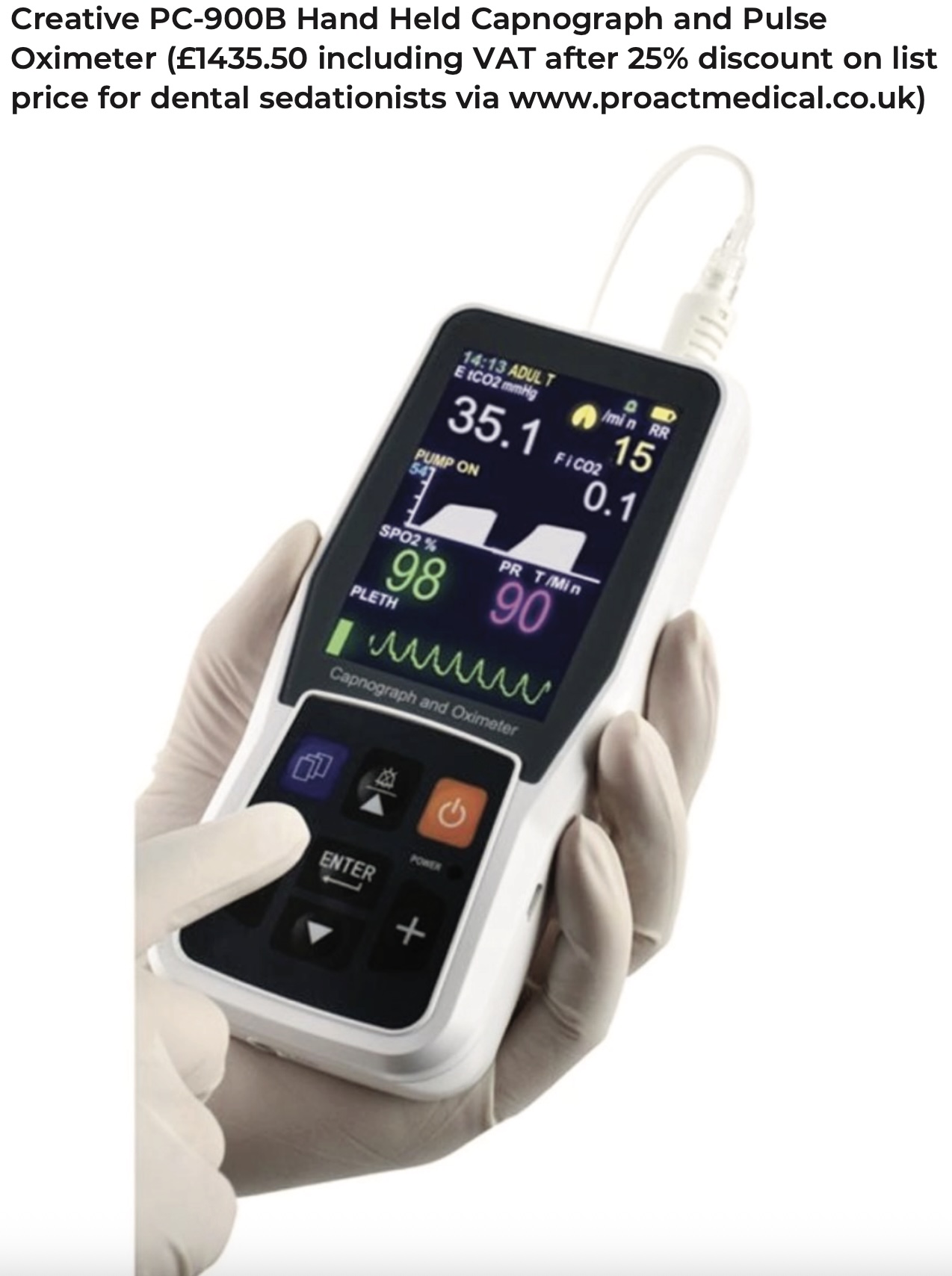
The Creative PC-900B is an entry-level solution combining capnography and pulse oximetry in a single, compact unit³ which can be handheld, supported with an included desktop stand or attached to a drip stand pole with an optional clamp (£69 + VAT).
Pros:
- Portability: Its small, handheld design is ideal for dental practices with limited space or for mobile sedation services. It's easy to move between surgeries. It has a 10 hour battery life and can be recharged with a USB cable
- Simplicity: The device is simple to operate and most users will only need to configure alarm limits
- Affordable: This is currently the cheapest capnograph and pulse oximeter on the market
- Durability: The device comes with a protective silicone boot, making it robust enough for daily use in a busy clinical environment
- Compatibility: The device can be used with both Microstream and non-Microstream sampling lines as an optional screw-in water trap is provided.
Cons:
- Need for multiple monitors: A separate blood pressure monitor will be required
- Display size: The smaller screen, while clear, is harder to read from a distance compared to a larger console monitor, making it difficult to easily identify any changes in the waveform.
Our verdict: This is a small, easy to use device, ideal for sedationists keen to use capnography but where the capital cost is the primary obstacle. It is also ideal for those with limited storage or where portability is important.
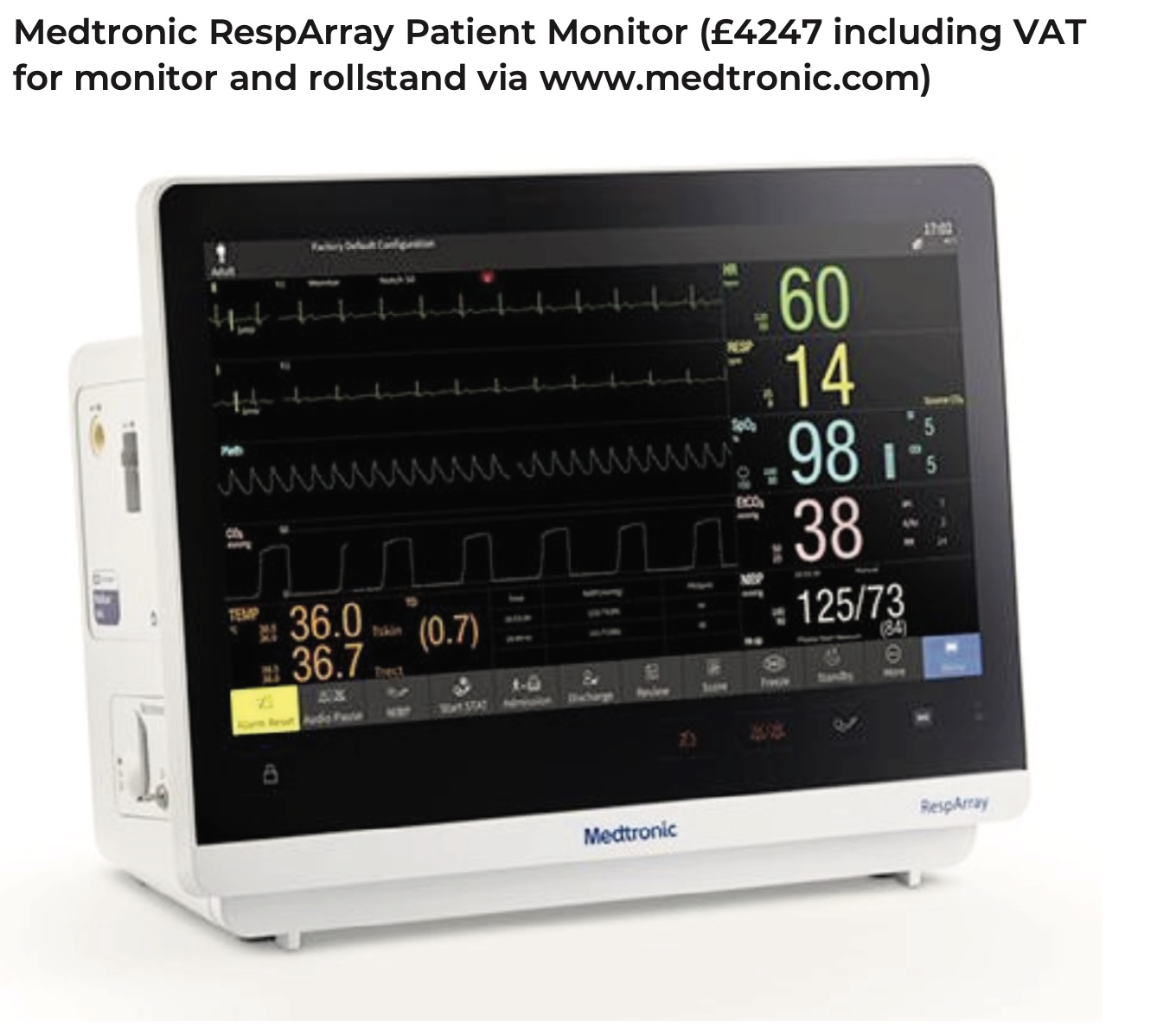
The Medtronic RespArray is a more advanced, multiparameter patient monitor that offers a comprehensive suite of monitoring capabilities, including Microstream™ capnography, Nellcor™ pulse oximetry, ECG and NIBP.
Pros:
- Comprehensive monitoring: This is a ‘one-box’ solution providing all necessary monitoring (and more) with a large touchscreen that can be customised. The display is clear and can also be customised by size and to display the main parameters required
- Five hour battery life: If mains power is not easily available during procedures, the removable battery will last a minimum of five hours on a full charge
- Advanced technology: This is a fully featured monitor with a wealth of features such as Smart Breath Detection, which filters out non-breath excursions in EtCO2 such as talking to give a more accurate respiratory rate. The Nellcor pulse oximetry is extremely accurate and reliable. There are also additional features such as the signal strength of the pulse-oximetry and optional use of ECG.
Cons:
- Cost: This is a significantly more expensive piece of equipment compared to a simple handheld capnograph. However, it is also less expensive compared to other multiparameter monitors with the similar features
- Size and portability: As a console monitor, it is larger, heavier and less portable than the Creative PC-900B. We would recommend the purchase of the roll stand which allows safe, convenient and flexible placement of the device during procedures
- Complexity: The extensive feature set and configurable options might be overwhelming for a clinician who only needs basic capnography and pulse oximetry functions, although specific profiles can be easily applied to simplify the display.
Our verdict:
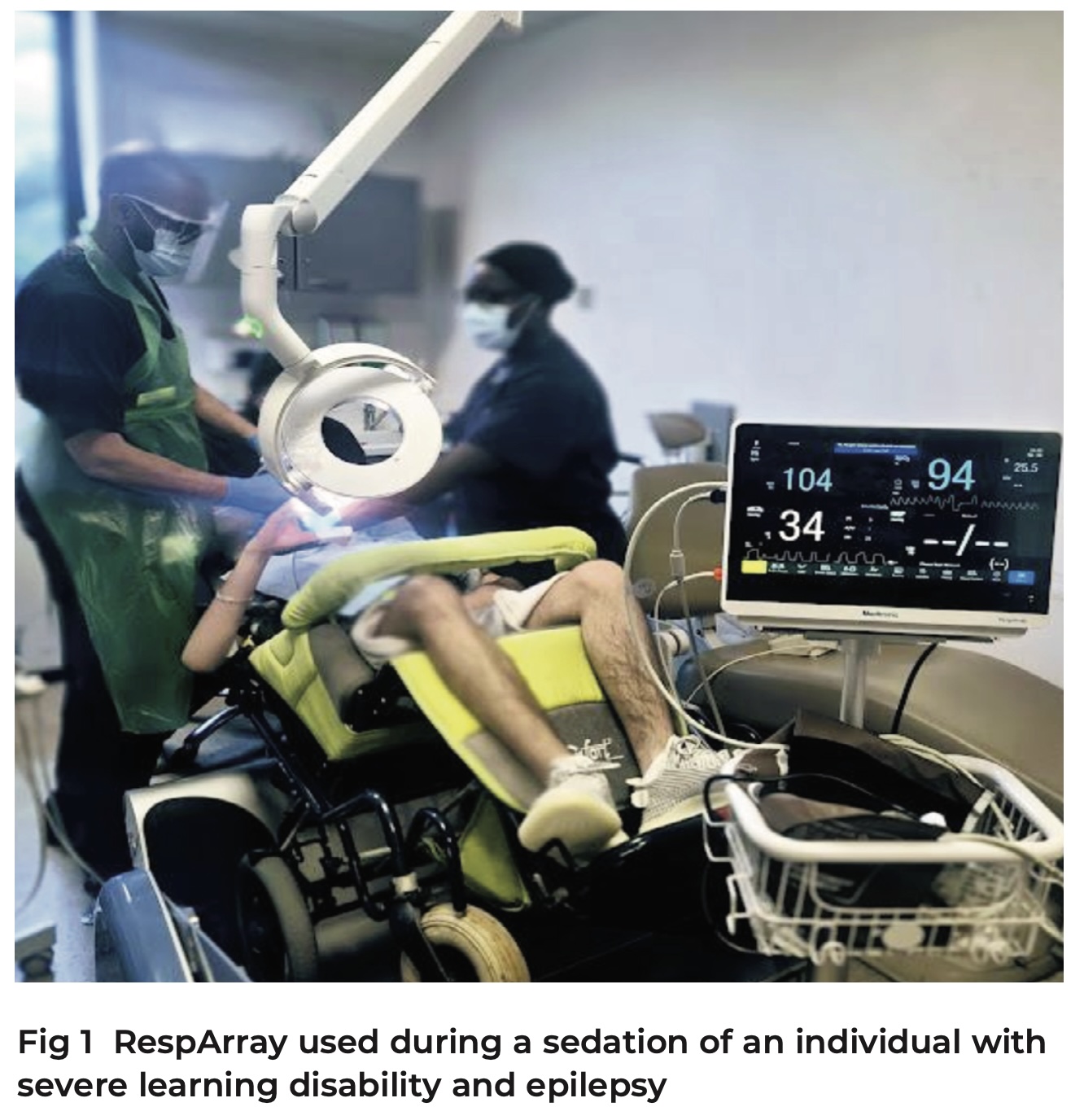
The Medtronic RespArray is ideal for a sedation service that wants to invest in a comprehensive monitoring solution. From a human factors perspective, the clear display of all observations on one large screen is ideal. Once accustomed to the menus and features it is very intuitive to use especially for clinicians who are already accustomed to using a smartphone.
Other devices
Multiparameter monitors that include EtCO2 are available from other manufacturers such as Mindray, Dräger, Nihon-Kohden, Philips, Edan, Masimo and GE Healthcare amongst others. We selected devices for this review based on recommendations from sedationists already using the devices and the active marketing (and tailored support) of these devices to the dental sedation market.
Conclusion
Capnography is a useful and powerful adjunct to pulse oximetry in dental sedation. By providing an instant and continuous measure of ventilation, it offers a real-time, early warning of respiratory depression that pulse oximetry cannot. It is an excellent adjunct for clinicians having to manage cases with additional medical and physical co-morbidities. While not yet a mandatory standard for all conscious dental sedation in the UK, its use is strongly recommended by key bodies like the AoMRC and IACSD, and its adoption reflects a commitment to best practice and enhanced patient safety.
When selecting equipment, the choice ultimately depends on the specific needs of your practice. For those seeking a simple, portable and cost-effective solution, the Creative PC- 900B is an excellent choice. If your sedation practice is in a regular location and demands a more advanced, all-in-one solution with expanded monitoring capabilities, the Medtronic RespArray is an ideal monitor to use.
Declaration of Interest
Loan devices were provided to Greg Gerrard by Pro-Act Medical and Medtronic for review. Hamza Hossenally has used both devices over the last 12 months.
References
- Intercollegiate Advisory Committee for Sedation in Dentistry. Standards for conscious sedation in the provision of dental care (V1.1). 2020. Online information available at https://www.rcseng.ac.uk/-/media/Files/RCS/FDS/Publications/Standards-for-conscious-sedation-and-accreditation/Dental-sedation-report-v11-2020.pdf
- Academy of Medical Royal Colleges. Safe Sedation Practice for Healthcare Procedures: Standards and Guidance. London: AoMRC; 2013.
- Creative Medical. Creative PC-900B Hand-held Capnograph. Online information available at https://www.proactmedical.co.uk/product/creative-pc-900b-hand-held-capnograph-and-pulse-oximeter-creative-spo2-single-
- Medtronic. RespArray Patient Monitor. Online information available at https://www.medtronic.com/covidien/en-gb/products/multiparameter-monitoring/resparray-patient-monitor.html