


Please click on the tables and figures to enlarge
Anaesthetic-led conscious sedation for patients with learning disabilities
B. Raveendran*1
R. Emanuel2
A. Kaul3
1Speciality Registrar in Special Care Dentistry, Special Care Dental Services, Sussex Community NHS Foundation Trust, Haywards Heath Health Centre, Heath Road, Haywards Heath, West Sussex, RH16 3BB;
2Consultant in Special Care Dentistry, Special Care Dental Services, Sussex Community NHS Foundation Trust, Haywards Heath Health Centre, Heath Road, Haywards Heath, West Sussex, RH16 3BB;
3Specialist in Special Care Dentistry, Special Care Dental Services, Sussex Community NHS Foundation Trust, Haywards Heath Health Centre, Heath Road, Haywards Health, West Sussex, RH16 3BB.
* Correspondence to: Dr Brasanyaa Raveendran
Email: b.raveendran@nhs.net
DOI: 10.63507/YQJW5774
Abstract
Introduction
This paper focuses on the anaesthetist led conscious sedation (intranasal / intravenous (INIV)) service for patients with moderate / severe learning disabilities within primary care in Sussex Community NHS Foundation Trust (SCFT). It reflects on the dental journey of patients with learning disabilities, and the challenges patients can encounter with accessing dental care.
Aims
This paper is about patients with learning disabilities who cannot communicate their needs and / or co-operate with a dental examination. We will discuss the role of conscious sedation in patient management and focus on patients who may not be suitable for behaviour management.
Design
For more than a decade, there has been a successful anaesthetist-led conscious sedation service for patients with learning disabilities. This service allows patients to be referred for clinical examination and treatment planning as indicated, without the need for a general anaesthetic (GA).
Main outcome methods
To use the sedation service at SCFT as an example of a successful care pathway, this service supports patients with moderate- severe learning disabilities to access dental treatment.
Conclusion
- To review feedback from learning disability patients and their care teams on the quality of dental care they receive in community dental services
- To discuss models of care to improve access to services for patients who cannot accept dental examination or treatment due to cognitive impairment and focus on learning disability
- To extend the anaesthetist-led conscious sedation service nationally so patients with moderate-severe learning disabilities are having routine examinations and treatment within an appropriate time frame, prior to the onset of an acute episode.
Key learning points
- To understand the importance of anaesthetist led conscious sedation in the management of patients with learning disabilities in the primary care setting
- To review the barriers and demands for the sedation service for learning disability patients and how it prevents onwards referrals to secondary/tertiary care and general anaesthesia procedures
- To promote anaesthetist led conscious sedation service in primary care, it was suggested further training and experiential support would be useful
- Outline the emerging therapies being used to provide conscious sedation for patients with learning disabilities.
Conscious sedation is a technique which depresses the central nervous system enabling dental treatment to be carried out, during which verbal contact and laryngeal reflexes should be maintained.1 Conscious sedation can be performed by a trained professional who has completed the appropriate postgraduate training in both primary and secondary care.1
Conscious sedation is a useful tool to help patients accept dental treatment without employing more invasive methods such as general anaesthesia (GA). Patients with moderate-severe learning disabilities may lack capacity to understand what is happening in the dental environment and as a result may not tolerate clinical examinations. Without a clinical examination, it is difficult to diagnose dental disease so a review under conscious sedation or GA may be indicated.
Patients with learning disabilities should be seen as a priority group within special care dental services (SCDS), patients are generally not able to accept dental treatment with a general dental practitioner, and therefore depend on specialist services. This service was started as a care pathway for learning disability patients, as this cohort of patients often present with unmet treatment needs and were more likely to have teeth extracted. Despite the availability of restorative options, due to the challenges faced by patients with accepting dental treatment, complex restorative treatment may not be in their best interest.
In recognition of the challenges learning disability patients experience with accessing dental care, this service was funded by SCFT Special Care Dental Services and was commissioning, and was set up, as a pilot scheme in 2012. The costs for the service set up was accommodated by savings made from cuts to planned GA procedures which instead became INIV sedation appointments. In 2012, the approximate cost of a single GA session was approximately £2,000 whilst a conscious sedation treatment session was approximately £500; the difference between the costings meant that appropriate cases were referred for sedation as the first line management rather than directly for a GA procedure. Over the last 13 years, it has been a successful service treating many patients and this paper advocates why similar services should be introduced nationally across various trusts.
Background
This paper will discuss how the service supports patients with learning disabilities to access dental care, review the treatment modalities available and the least restrictive options for optimising dental wellbeing.2 The introduction of this service has prevented numerous patients being referred for treatment under GA.
The INIV treatment sessions are planned on a monthly basis with a visiting Consultant Anaesthetist providing the conscious sedation whilst the dental team complete the treatment. There are two patients scheduled per session with a two-hour treatment slot for each patient, this includes time for the pre-operative assessment, confirmation of consent and confirmation that the post-operative instructions have been understood. There are approximately 24 treatment sessions per year.
The Trust covers a large area so some patients need to travel a significant distance and attend with family or their care workers. Patients often have cognitive impairments and can struggle with post-operative care instructions, therefore, to ensure patients travel safely to their residence the support of a carer is mandatory.
The main criterion for incoming referrals is that the patient must have a learning disability diagnosis – generally patients present with moderate to severe learning disabilities. Patients with mild learning disabilities are generally able to accept treatment using other treatment modalities such as behavioural management and inhalation sedation; these patients may not require specialist services and can access services via other care pathways which are more appropriate.
Patients with moderate to severe learning disabilities often present with other medical comorbidities which indicate referral to the community dental services or secondary care.3 Patients often lack capacity to consent or have varying levels of capacity for dental treatment which can make the provision of dental treatment difficult. The mental capacity assessment allows clinicians to review whether patients have the capacity to understand and make decisions based on the options. Where possible, patients must be encouraged to take part in decision making with appropriate support – leading to the ‘no decision about me, without me’, principle.4
Special care dental service in primary care
In SCFT, the treatment modalities available in community dental services include dental treatment with behavioural management and specialist support under local anaesthetic, inhalation sedation, conscious sedation (INIV sedation for learning disability patients only) and general anaesthetic at two hospital sites. SCFT is not commissioned to provide IV sedation for children or phobic adults.
The INIV sedation was initially set up to accommodate dental examinations, radiographs and treatment planning for patients with learning disabilities. Patients with learning disabilities cannot always express their needs, care teams struggle to identify issues; dentists may struggle to examine the patient and perhaps only suspect a problem. In a patient with high dental needs and medical comorbidities, it will be appropriate for the patients to be treated in a hospital environment under conscious sedation or GA procedure. However, if a patient requires minimal treatment such as a dental review and a simple restorations or extraction, then it may be appropriate to treat this patient with conscious sedation in primary care. The INIV sedation service at SCFT, offers more options for patients to access care locally and in a setting which may be more acceptable to the patient.
Patients with learning disabilities present with more untreated disease and are likely to have multiple unrestorable teeth which require extractions.5 The use of INIV sedation allows for routine reviews and earlier detection and intervention including restorations rather than the option of extracting teeth. There is no official guidance for a recall interval, but in patients of high risk of dental disease this may be advisable every two years and in low risk it can be between three and four years, with an earlier review if there is an indication of dental pain.
During acute episodes of pain, special care patients cannot accept dental treatment in general dental practice and the private option to seeking treatment is not always readily available. Patients with learning disabilities are usually on a low income so accessing private dental services can be difficult. This means patients and their care teams are dependent on the NHS services to be seen in acute emergencies.
When are patients referred to the conscious sedation service?
Patients are usually referred to SCDS by their learning disability teams, general dental practitioners or general medical practitioners. The presenting complaints can be patients expressing episodes of dental pain or the next of kin / care teams may be concerned about changes in behaviour indicating signs of dental pain. Some patients who are verbal may not have the capacity to express pain and other patients may be non-verbal. Sometimes patients can indicate orofacial pain with signs of flinching, distress when brushing teeth or restricted dietary intake. Patients may also be drooling or touching the area with signs of self-inflicted trauma in severe cases, giving an indication of where the dental pain is originating from.8
In-house referral
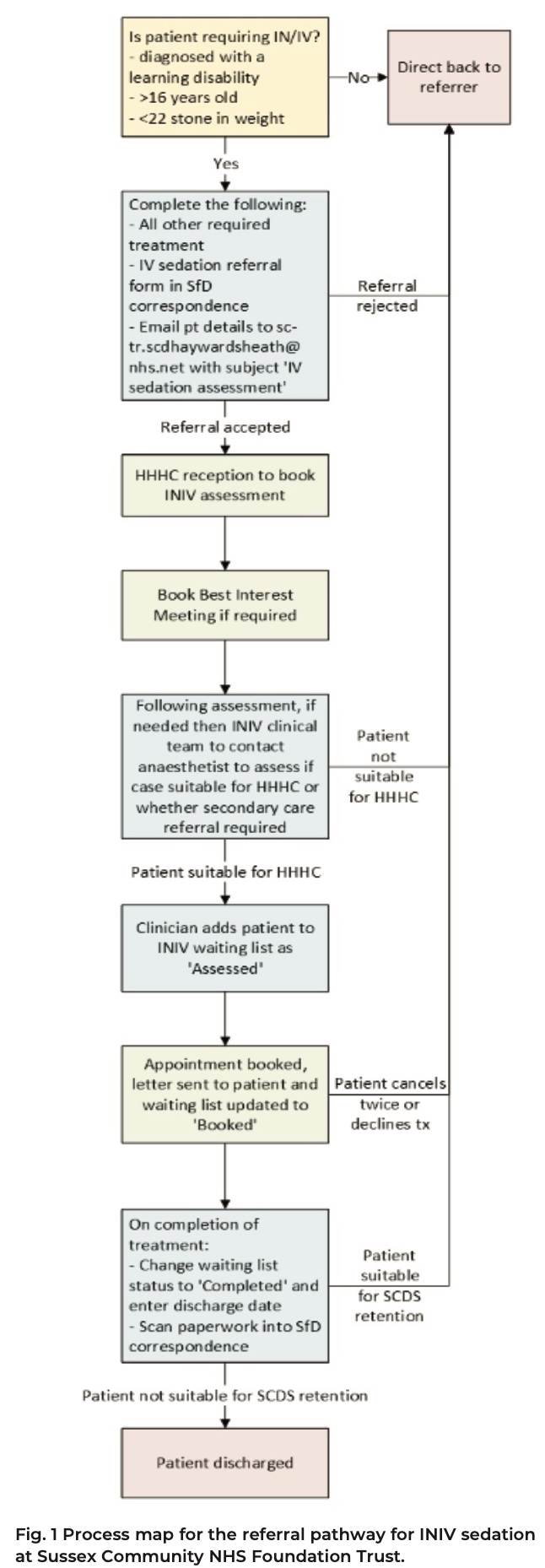
All referrals to the SCFT conscious sedation service operate on an internal referral basis. Common reasons for referral include not being able to do a clinical assessment, a patient expressing pain, changes in behaviour indicating a patient in pain or a clinical examination highlighting dental disease which requires treatment. Clinicians working within SCFT are aware of the stringent referral criteria and that the referral is one or to two items of care or treatment which can be provided within a time frame of approximately 40 minutes. If the treatment cannot be completed within this time frame, a referral for a GA procedure may be recommended. Figure 1 shows the referral pathway for the sedation service.
The referral criteria for this service include patients who are 16 years or more and diagnosed with learning disabilities. Medically, appropriate patients are required to be ASA 1 or 2 (American Society of Anaesthesiologists) as they are being seen in primary care, and due to the dental chair requirements, to weigh less than 22 stone with a BMI of between 18.5 to 30; if their weight or BMI are above these levels, they will be referred for secondary care or treatment under GA. The challenges in treating patients with a high BMI or ASA 3+ include risks associated with medical comorbidities and airway management. In case of a medical emergency, patients are better managed in secondary care with access to a medical team.
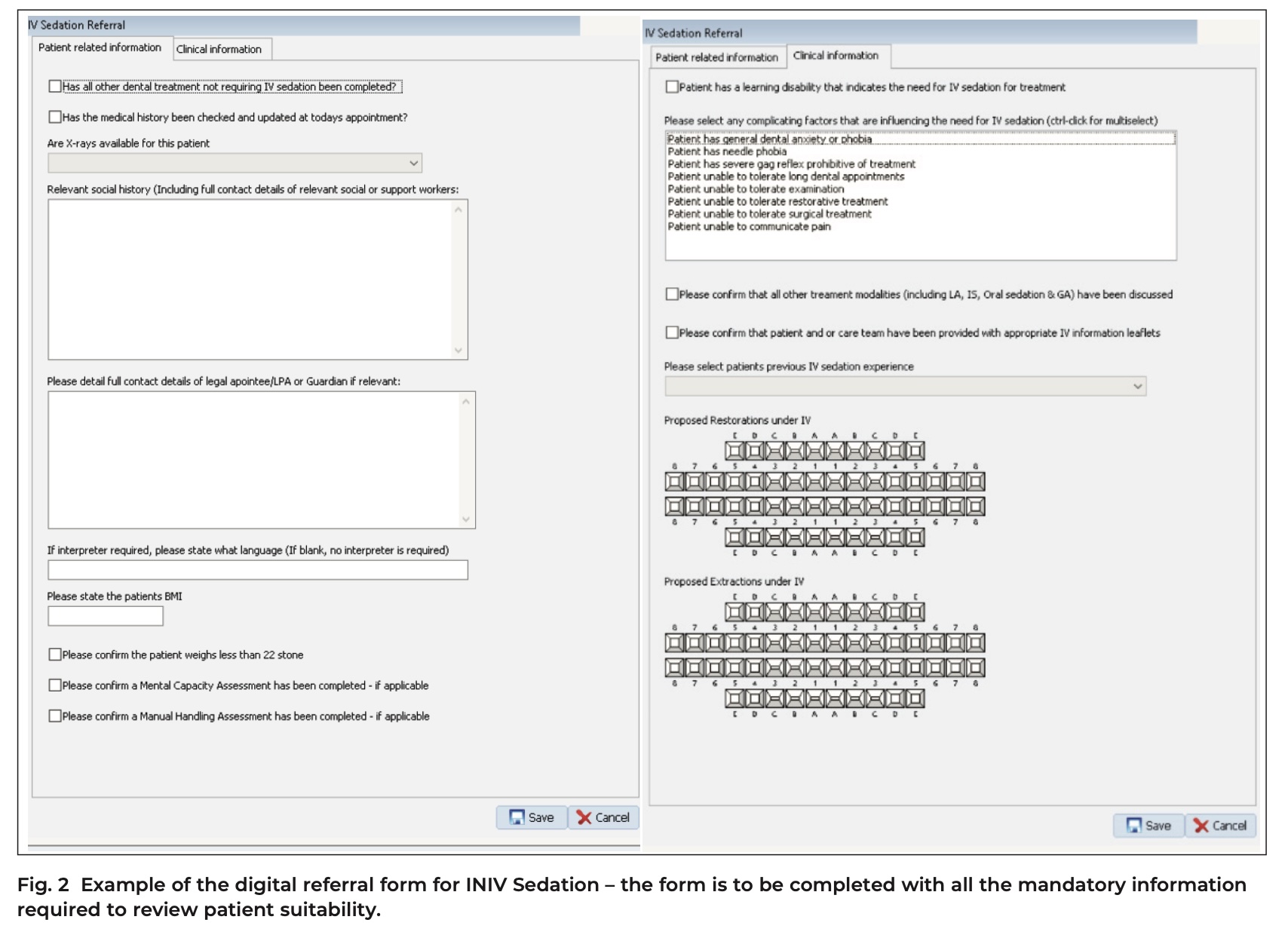
As part of the referral process, the referring clinician completes an INIV sedation referral form, a digital form that is available on the computer software used by SCFT – Software for Dentists (SfD) (see Figure 2).
Referring clinicians are responsible for ensuring that there is an updated medical history and General Practitioner (GP) summary available for the INIV sedation team to review as part of the preassessment, including completion of manual handling assessment and mental capacity assessment in applicable cases. If the referral meets the criteria, then this will be booked in for an assessment. If the referral does not meet the criteria, the clinical team will revert the referral back to the referring clinician and discuss why the case may not be suitable.
What does the assessment process for INIV sedation involve?
The patient generally attends for the appointments accompanied by their next of kin, friend, LPA (Lasting Power of Attorney) and / or the care team. Patients with learning disabilities can present from a range of social circumstances; some patients may live with their family with support of carers, whilst other patients may be in residential homes with the support of the care staff and may not necessarily have any relationship with their next of kin.
The preferable radiographs to aid decision-making are intraoral periapical radiographs or bitewing radiographs but in cases where patients cannot tolerate these, it may be appropriate to consider extraoral radiographs such as a dental panoramic tomograph or lateral obliques. Taking lateral obliques may require the next of kin to hold the radiograph plate in the appropriate position with clinician holding the patient’s head.9 The Trust guidance is that it is only carried out with family members or friends assisting and not paid carers.
During an exam we may be able to assess the anterior teeth to a certain extent, the presence of radiographs of posterior teeth can give a baseline for the presence of dental disease and if treatment modalities need to be considered. In the presence of clinical or radiographic evidence of a failed restoration or a grossly carious tooth, then the treatment option of conscious sedation or GA will be discussed.
Mental capacity assessment / consent
Undertaking a mental capacity assessment (MCA) is a mandatory requirement as part of the Mental Capacity Act 2005 to determine whether a person has the capacity to consent. This assessment determines if an adult aged 16 years or older can make a specific decision at a specific time; so as to be able to understand, retain, assess benefits and risks and communicate decisions. Patients with learning disabilities can present with capacity concerns so the completion of the MCA will allow the clinician to identify if the patient can consent to the treatment plan or whether a best interests meeting is recommended.10
In patients who do not have capacity, a consent form four is used; this involves a best interests discussion and a detailed consent process. The best interests process generally involves the patient, next of kin and / or care teams. During the best interests meeting, the patient and their care teams will be informed of the clinical problems, reason for referral and the treatment needs. The purpose of a best interest decision is to provide the patient with optimal support for decision making through reasonable adjustments, and to aid communication so that the patient is as involved as possible.10
If patients present for the assessment with their next of kin or carers then the best interests discussion is usually completed on the same day, followed by completion of the consent form. If the next of kin has not attended, then a best interests discussion is arranged via a second appointment or remotely via a telephone conversation. If the next of kin are happy with the options and treatment plan, they co-sign the consent form and return it via post or email.
If the patient does not have next of kin or care team members who are able to decide in their best interests, a second opinion is sought with a dental clinician to confirm that the proposed treatment plan is in the patient’s best interests. Where deemed necessary an Independent Mental Capacity Advocate (IMCA) referral can be made. The purpose of an IMCA is to ensure there is an independent review of the proposed treatment plan to confirm the treatment is in the best interests of the patient.11
Manual handling assessment
A manual handling assessment is for patients with learning disabilities who present with physical disabilities and may have problems accessing the dental chair. This risk assessment is completed to ensure safe patient transfers and to assess falls risks and the wellbeing of patients following the sedation when they are at an increased risk of falls.
The aim of the assessment is to document the nature of any mobility issues and what aids will be needed for the safe transfer of the patient into and out of the dental chair.12 The manual handling assessment reviews any special precautions required in respect of factors such as pain, / stiffness, / sudden movements, / hearing or visual impairments, and allows us as clinicians to determine a safe way in which a patient can be accommodated in the service.11 Wheelchair users must be able to transfer to the dental chair using a banana transfer board, a rota stand or a manual hoist using a patient-specific sling. There are no facilities for a wheelchair recliner or a large wheelchair to be used at the clinic. Bedbound / stretchered patients who cannot transfer to the dental chair may not be suitable for this IV sedation service due to space limitations in the dental surgery.
Clinical holding
Clinical holding is defined as ‘the use of physical assistance to support a patient to accept and receive dental care and treatment in situations where the patient’s behaviour may limit the ability to delivery dental treatment safely.’ It may be useful where a patient’s behaviour may be a safety risk to themselves, the dental team or the accompanying care team.13
Patients with moderate to severe learning difficulties can present with erratic behaviour with increased movements of their limbs by not being comfortable or familiar with the dental environment. There is always a risk of sudden movements and / or biting and therefore, as part of the INIV sedation assessment, consideration of the need for clinical holding is also included in the best interests meeting.13
The medical history is also reviewed in the risk assessment with the INIV sedation team being alerted if the patient is at risk of epilepsy, cardiac disease, hearing or visual impairments. The history of neck trauma is reviewed to identify if the patient is suitable to be treated in the dental chair and whether any extra support such as suction pillows may be useful to aid positioning. The INIV sedation team use it to facilitate the treatment under INIV sedation but if the patient is distressed or the holding is not in the best interests of the patient, then this will be abandoned.12 The most important part of clinical holding is supporting the anaesthetist when placing the cannula; the patient’s wrist is held gently yet firmly whilst standing adjacent to the patient to block the view of the cannulation process.
The reason why this service has a Consultant Anaesthetist as the sedationist is due to the complexity of the patients we see; the key issues include difficulty cannulating patients who are constantly moving, and difficult venous access for cannulation. On occasions, the erratic movements and ‘hidden’ veins make it a challenge to cannulate these patients and even senior clinicians have difficulty on occasions in cannulating the patient.
The patient and care team are often informed of the risk of bruising at the cannulation site as part of the initial assessment and again reminded during the discharge phase. If the patient had multiple cannulation sites, this information is also provided to the accompanying care team due to the risk of bruising.
Preparatory instructions
As part of the INIV sedation guidance, we encourage patients to follow the same fasting advice as that for GA procedures. No food should be consumed within six hours of the procedure and nothing to drink two hours before the procedure, with only clear fluids including water to be consumed in the interim; reducing the risk of vomiting and aspiration pneumonia from regurgitation of gastric contents into the lungs.14
If the patient takes medication in the morning, depending on the nature of the medication, this is discussed with the Consultant Anaesthetist and guidance is provided to the patient. Generally, any medications used for seizure control are not omitted, and anti-platelet or anti-coagulation medication are delayed where possible, to reduce the risk of intra- operative bleeding following dental extractions.
What happens on the INIV sedation treatment day?
On the day of the procedure, the patients are advised to attend at 8.30am or 10am, depending on whether they are first or second on the treatment list. On arrival, the sedation nurses complete a pre-assessment to ensure that the patient has followed the instructions regarding being starved prior to the session.
The patient is escorted from the dental waiting room to the clinic with their care team. Introductions are completed at this stage, the consent form is reviewed by the sedation clinical team, followed by the Consultant Anaesthetist confirming the medical history. Once the safety checks are completed, for needle-phobic patients’ intranasal midazolam is administered by the Consultant Anaesthetist to relax the patient, this is to aid relaxation of the patient prior to cannulation. If the patient is not needle-phobic and allows cannulation, they are brought into the surgery, and a cannula is placed by the anaesthetist. This information is gathered in the assessment appointment by confirming how compliant the patient is with routine blood tests.
The drug administered intranasally and intravenously is midazolam only; there is no other sedative drug used due to the high effectivity of midazolam in this cohort of patients. Moreover, as the setting is primary care services, the use of only midazolam sedation is recommended, to ensure patient safety and reduce any adverse events.
In the presence of caries, periodontal disease or unrestorable teeth, the treatment is started depending on the priority. If the patient has an unrestorable tooth, then the priority will be to extract the tooth and achieve haemostasis, followed by any other urgent treatment. If the treatment need is high, a treatment plan is put together and if this involves restorations and extractions (>2-3 items of care/treatment) the patient is usually referred for GA; if the patient requires dental extractions only they may be referred to the Maxillofacial Unit, if the waiting list is shorter. The treatment is limited to 2-3 items as this is the average we complete within the sedation window and any treatment above this limit often requires GA due to patient compliance being reduced.
Case 1 (Vignette), which is found later in this paper, is an example of a case referred to the Maxillofacial Unit following an INIV sedation session.
Intranasal sedation
Intranasal (IN) sedation is the administration of a small amount of the midazolam sedative drug into the nose via the nasal atomising device. The purpose of the IN sedation is to relax the patient before they enter the dental surgery and improves patient compliance for seating in the dental chair, positioning and administering the IV cannula. The patient will not be completely sedated but the midazolam can cause amnesic effects and generalised relaxation, and patients do not generally remember anything from this point forwards.15
In patients who may be taking benzodiazepines as part of their anti-epileptic regime, there may be midazolam intolerance hence the IN sedation may not work as efficiently, or longer time may be taken to relax the patient. In this cohort of patients, a higher dose of intravenous midazolam may be required for effective sedation and will be closely monitored by the anaesthetic clinician.
The intranasal midazolam is prepared and administered by the anaesthetic clinician where the midazolam (approximately 10-20 mg – depending on patient size and medication use) is sprayed into the nose via a nasal atomiser. Although this is a non-licensed use of midazolam, it is effective in patients with moderate to severe learning disabilities, as it relaxes the patient to allow for the next steps. Once the sedative drug has been administered, patients are encouraged to sniff up but occasionally do spit out or sniff out into a tissue; this can be a concern in patients who have sensory issues and can affect the patient’s compliance.15 For this cohort of patients, a nasal atomiser can be given during the assessment appointment to familiarise themselves with at home to improve their compliance.
Monitoring
The current standards for monitoring during conscious sedation include clinical observation – blood pressure monitoring and pulse oximetry. Pulse oximetry continuously indicates the level of oxygenation during treatment, but it does not measure ventilation.16 During sedation, the anaesthetist monitors the patient’s welfare using pulse oximetry and by watching the patient’s breathing. Careful monitoring of breathing is important with intravenous midazolam due to the risk of oversedation. The monitoring used during the INIV sedation session includes of the blood pressure and of the pulse oximeter, which is recorded both pre-operatively, intra-operatively and post-operatively.
As part of the assessment appointment, the pulse oximeter levels and blood pressure are read to give baseline measurements for comparison with during the sedation procedure. The blood pressure is taken pre-operatively at the pre-assessment visit, at the beginning of the sedation procedure and post-recovery. If there are any concerns in the interim related to airway issues or reduced oxygen saturation <95%, blood pressure is monitored routinely on a 10-minute frequency. The pulse oximeter readings are monitored continuously during sedation; if the oxygen saturation decreases and falls below 95-96% during treatment, supplemental oxygen is usually given via a nasal cannula at a flow rate of 2-4 L. This should raise the oxygen saturation to above 95% but if the value does not increase and stabilise, dental treatment is abandoned.
Currently we are not using capnography as a monitoring measure during INIV sedation, but this has been discussed as being useful in earlier detection of reduced oxygen saturation levels. Capnography is a sensitive tool for assessing the patient’s respiratory function and offers real time data on desaturation.
Flumazenil reversal
Flumazenil is a benzodiazepine which is effective in terminating the amnesic properties of midazolam, but this appears to have a high chance of re-sedating the patient due to flumazenil having a shorter half-life than midazolam.16 Flumazenil should always be available as an emergency drug, to reverse patients in an acute situation but is regularly used in sedation services for reversing patients.16
In the INIV sedation service, it is also used to aid the recovery process of learning disability patients. Patients with learning disability may find the recovery stage disorientating, so the hastened reversal of their sedation can be useful to settle patients. The flumazenil is generally administered incrementally by the Consultant Anaesthetist, as a 0.5 mcg dose via the intravenous cannula, whilst the vital signs are being monitored.
The reversal of patients is often to aid the recovery phase and facilitate the discharge process, as it is done under the guidance of the medical team. It allows for the safe transfer of the patient into their wheelchair and before a long journey home. The care team are advised of the risk of the patient becoming re-sedated, so close supervision is recommended for 24 hours after the procedure, with one-to-one care. Flumazenil is contraindicated in patients with a known hypersensitivity and in patients at risk of respiratory depression; this drug is a benzodiazepine which can cause further respiratory complication so should be used only in appropriate cases and in a controlled manner.17
Discharge
Following INIV sedation, the discharge process is led by the Consultant Anaesthetist. Post-operative monitoring includes blood pressure measurement and pulse oximetry. Patients are encouraged to wake up following the sedation procedure with active encouragement from the sedation team. As the patient recovers from the sedation, the accompanying escort team are brought into the surgery so that the patient sees a familiar face during recovery. Patients are given time to recover from the sedation; if the patient can walk, they should be competent in walking a short distance without any support.
If the recovery process is taking longer than usual, patients are transferred to an adjacent surgery until they are recovered. During this time, a trained sedation dental nurse monitors the patient and escalates any issues to the Consultant Anaesthetist in the adjacent surgery.
During the recovery phase, patients must be able to transfer back to their wheelchair in the same way they transferred into the dental chair. If patients are more unstable than normal, they are recovered for longer in the dental chair to allow time for the midazolam sedation to wear off, or flumazenil may be administered to aid recovery.
Case 1 (Vignette)
A 45-year-old male patient was referred to the INIV sedation service in April 2024 by a senior dental officer following a routine review, where the care team reported behaviour changes indicating possible dental pain. These changes included hand biting and hitting his face, which raised concerns amongst the care team that he had possible dental pain. During a brief examination at the review appointment, the referring clinician suspected pain from the LR quadrant as the LR6 and LR7 were grossly carious, and this was consistent with the area where the patient was hitting his face.
The patient’s medical history was ASA 2 (American Society of Anesthesiologists) and he was diagnosed with cerebral palsy, osteoporosis, epilepsy, spinal scoliosis, moderate learning disability, hyponatraemia and was wheelchair bound. In October 2024, the patient’s medications included carbamazepine, lansoprazole, sennosides and cholecalciferol. The patient was not known to have any drug allergies.
Following the initial referral, the INIV sedation assessment was carried out in June 2024 with the INIV sedation treatment being scheduled for October 2024. During both the sedation assessment and treatment appointment, the patient’s care team reported that the patient was no longer indicating signs of orofacial pain, and the self-harming behaviour had also stopped. The patient was able to eat and drink well and did not report any episodes of systemic infection.
During the INIV sedation, the patient was given 20 mg intranasal midazolam and followed by a 5 mg midazolam intravenously. The patient’s oxygen saturation was monitored throughout the procedure and readings ranged between 95-97%; no supplemental oxygen was given.
The quality of sedation was noted to be suboptimal with a sedation scoring of 1 (Ramsay Scale) which includes being fully awake and orientated. The patient was compliant with having a clinical examination but was too alert for any dental treatment to be carried out. A cursory dental examination revealed multiple carious teeth, and the patient was diagnosed to require a full dental clearance. The dental examination revealed no acute signs of infection and the need for analgesics or antibiotics was not indicated.
The short sedation window for this patient could have been secondary to intolerance to midazolam. The patient had been diagnosed with epilepsy, and midazolam is a form of benzodiazepine which is often used in the management of acute epileptic seizures. The patient was also on carbamazepine, a type of anticonvulsant drug which has the risk of interacting with midazolam and thereby affecting the sedative effects of midazolam.
Discussion
Conscious sedation is a safer option for patients with learning disabilities due to reduced medical risks (fewer effects systemically as it does not change vital functions such as blood pressure and breathing function) and fewer complications in patients who present with other medical comorbidities alongside the learning disability.
The purpose of the conscious sedation service for patients with learning disabilities is to be a first line management to improve and aid patient compliance by sedating the patient and carrying out a clinical examination. If the treatment needs are for no more than 2-3 items of treatment, this often completed within one sedation treatment session. In patients who present with complex treatment needs and more than 3 items of treatment, due to time constraints, they often require referral for a GA procedure. On rare occasions, patients can be offered a second INIV treatment session, but this is generally avoided due to the extensive waiting list of patients with learning disabilities who are awaiting a procedure.
This sedation session confirmed the need to proceed for a GA treatment session by confirming the treatment needs. If there had been no dental disease noted, the patient would not have needed to be referred for a GA procedure. This case is an example of where INIV sedation was useful for a clinical examination and treatment planning for a patient who presented with pain.
In patients who are referred onwards for a GA, the dental team may be able to provide radiographs and a more structured treatment plan. The availability of a treatment plan also supports the best interest process as it allows a more focused discussion regarding the patient’s treatment needs.
When reviewing the literature, there was a retrospective audit in 2008 in which the efficacy and safety of combined INIV sedation was assessed for dental treatment of adults with learning disability. The data was collected from various parts of the United Kingdom including Canterbury, Warwick, Dorset and Cardiff. The findings from this paper relate to a total of 222 episodes of sedation, where 58% accepted dental treatment and a further 34% presented with problems but the treatment was still completed. In the remaining 8%, treatment with sedation was not possible and a referral was made for GA.6
Having reviewed the literature, there is minimal information on how many primary care services are providing conscious sedation services for patients with learning disabilities. Moving forward it would be useful to carry out a service evaluation to determine how many primary care providers offer conscious sedation and whether their sessions are Anaesthetist-led or Dentist-led. It would also be interesting to review the management of patients with learning disabilities and to see if they are referred to secondary/tertiary care for management and possibly look at the service pathways within SCFT to replicate the service to improve patient access and to reduce GA procedures nationally.
Future ideas
Regarding future planning for the INIV sedation service, the use of capnography has been considered as part of the monitoring process. Patients with learning disabilities can present with medical comorbidities and in such cases, it would be appropriate to use capnography to measure ventilation. Capnography is currently not a mandatory monitoring technique, but can monitor signs of early hypoventilation or apnoea, trigger early clinical intervention and help to prevent any adverse respiratory efforts. Although the use of a pulse oximeter is a good indication to ensure the patient is well perfused, the use of supplemental oxygen can mask the value of the pulse oximeter, whereas the use of capnography can provide real time information on potential respiratory problems.16,18
Conclusion
This INIV sedation service is an excellent and unique service which caters for patients with moderate / severe learning disabilities who may not be able to accept treatment by using routine methods such as local anaesthetic and may otherwise need to be referred for dental treatment under GA. Due to the sedation being administered by a Consultant Anaesthetist, patients are treated in a primary care setting and case selection is very stringent. This avoids the need for patients being referred to secondary care hospitals where there may be access issues and waiting lists may be longer.
The best aspect of this unique service is that patients can have dental examinations and minor dental treatment under INIV sedation; without the for GA. GA is not always in the best interests of patients with low dental treatment needs and presents with its own serious side effects, with INIV sedation being the safer option. With GA procedures, there is a risk of allergy to the anaesthetic drugs, risk of non-recovery due to associated medical comorbidities, malignant hypothermia and risk of respiratory depression in recovery.
Due to the careful patient selection for the conscious sedation sessions, there have been no cases to date of any risk of medical emergency or adverse events. The medical emergency kit is updated and routinely reviewed to ensure all the relevant emergency drugs and airways equipment is available in acute situations.
The Consultant Anaesthetists who provide this service are excellent clinicians who are very experienced in working with adults with learning disabilities and complex medical histories; they can deal with the challenges such patients may present, how to overcome potential challenges is discussed as part of the pre-assessment by liaising with medical teams in relevant cases.
Overall, the successful running of this sedation service has highlighted its effectiveness in providing dental care to a large cohort of patients who present to the SCDS. This service should be implemented on a national basis to reduce the costs associated to seeing patients in secondary / tertiary care and more locally in community dental services.
Acknowledgements
There are no acknowledgements to be declared.
Declaration of Interest
There is no conflict of interest to be declared.
Contributions
Medical Illustrations - Barts Health Trust
References
- Royal College of Surgeons of England, The Royal College of Surgeons of Edinburgh, The Royal The College of Physicians and Surgeons of Glasgow, The Royal College of Anaesthetists. Standards for Conscious Sedation in the provision of Dental Care and Accreditation: Report of the Intercollegiate Advisory Committee on Sedation in Dentistry 2020. Online information available at https://www.rcseng.ac.uk/dental-faculties/fds/publications-guidelines/standards-for-conscious-sedation-in-the-provision-of-dental-care-and-accreditation/ (accessed March 2025).
- GOV.UK. Learning disability - applying All Our Health 06/01/2025 28/03/2025. Online information available from: http://Learning disability - applying All Our Health - GOV.UK.
- Prince E, Ring H. Causes of learning disability and epilepsy: a review. Curr Opin Neurol. 2011;24:154-8. DOI: 10.1097/WCO.0b013e3283444c70
- Daniel M, John R, Rajkumar E, George A J, Abraham J. Cognitive style and working memory among adolescents with specific learning disability. J Educ Health Promot. 2022; 11: 196. DOI: 10.4103/jehp.jehp_1556_21.
- Escribano Hernández A, Hernández Corral T, Ruiz-Martín E, Porteros Sánchez J A. Results of a dental care protocol for mentally handicapped patients set in a primary health care area in Spain. Med Oral Patol Oral Cir Bucal. 2007;12:E492-5. PMID: 17978772
- Manley M C, Ransford N J, Lewis D A, Thompson S A, Forbes M. Retrospective audit of the efficacy and safety of the combined intranasal/intravenous midazolam sedation technique for the dental treatment of adults with learning disability. Br Dent J. 2008;205:E3; discussion 84-5. DOI: 10.1038/sj.bdj.2008.521
- Sherriff A, Stewart R, Macpherson L M D, Kidd J B R, Henderson A, Cairns D, et al. Child oral health and preventive dental service access among children with intellectual disabilities, autism and other educational additional support needs: A population-based record linkage cohort study. Community Dent Oral Epidemiol. 2023;51:494-502. DOI: 10.1111/cdoe.12805
- Noens I, van Berckelaer-Onnes I. Making sense in a fragmentary world: communication in people with autism and learning disability. Autism. 2004;8:197-218. DOI: 10.1177/1362361304042723.
- Ali A, Jinadasa M, Emmanuel R. Lateral oblique quality. Br Dent J. 2024 Apr;236:581. doi: 10.1038/s41415-024-7358-z. Epub 2024 Apr 26. PMID: 38671089. DOI: 10.1038/s41415-024-7358-z.
- Wong J G, Clare C H, Holland A J, Watson P C, Gunn M. The capacity of people with a 'mental disability' to make a health care decision. Psychol Med. 2000;30:295-306. DOI: 10.1017/s0033291700001768.
- Chatfield D A, Lee S, Cowley J, Kitzinger C, Kitzinger J, Menon D K. Is there a broader role for independent mental capacity advocates in critical care? An exploratory study. Nurs Crit Care. 2018;23:82-7. DOI: 10.1111/nicc.12290.
- Hallawell B, Stephens J, Charnock D. Physical activity and learning disability. Br J Nurs. 2012;21:609-12. DOI: 10.12968/bjon.2012.21.10.609.
- Kerr B, Edwards J A, Moosajee S, Shehabi Z, S Rafique. Audit of Clinical holding in Special Care Dentistry. Journal of Disability and Oral Health 2013; 14: 29-33. DOI: 10.4483/JDOH_017Kerr05.
- Dorrance M, Copp M. Perioperative fasting: A review. J Perioper Pract. 2020;30:204-9. DOI: 10.1177/1750458919877591
- Janiani P, Gurunathan D, Manohar R. Comparative evaluation of intranasal dexmedetomidine, intranasal midazolam, and nitrous oxide for conscious sedation of anxious children undergoing dental treatment: A randomized cross-over trial. J Indian Soc Pedod Prev Dent. 2024;42(2):141-8. DOI: 10.4103/jisppd.jisppd_104_24
- Quearney J. Should capnography be mandatory? Br Dent J. 2025 Mar;238:294. Epub 2025 Mar 14. PMID: 40087416.DOI: 10.1038/s41415-025-8518-5.
- An H, Godwin J. Flumazenil in benzodiazepine overdose. CMAJ. 2016;188:E537. DOI: 10.1503/cmaj.160357.
- McCloy RF. Reversal of conscious sedation by flumazenil: current status and future prospects. Acta Anaesthesiol Scand Suppl. 1995;108:35-42. PMID: 8693923.